

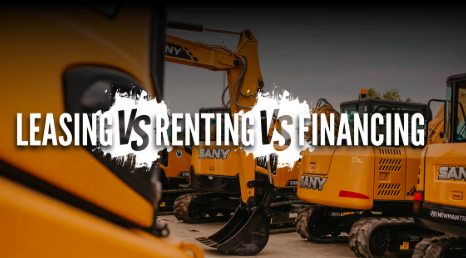
Lease vs Finance: Strategic Decisions for Heavy Equipment Acquisition
For construction companies, acquiring heavy equipment is a critical operational decision. The choice between leasing and financing directly affects cash flow, project efficiency, and long-term financial stability. Both options offer benefits, but selecting the right approach requires careful consideration of project requirements, budget constraints, and growth objectives.
Strategic equipment financing allows contractors to acquire necessary machinery while preserving working capital for payroll, materials, and other operational obligations. Understanding how to structure financing decisions can optimize both productivity and financial flexibility.
Understanding the Equipment Acquisition Options
Heavy equipment acquisition typically falls into two primary options: leasing and financing (purchasing with a loan). Each has distinct characteristics that affect cash flow, ownership, and operational strategy.
Leasing Heavy Equipment
Leasing involves renting equipment for a fixed period, usually with monthly payments. Common leasing structures include:
- Operating leases: Short-term, often used for seasonal projects or specialized machinery.
- Capital leases: Longer-term, with an option to purchase at the end of the lease term.
Benefits of leasing:
- Lower upfront costs compared to outright purchases
- Flexibility to upgrade equipment at the end of the lease
- Predictable monthly payments, supporting cash flow planning
- Limited long-term maintenance responsibility, depending on the agreement
Leasing is ideal for projects requiring specialized equipment for short durations or when capital preservation is a priority.
Financing (Equipment Loans)
Financing involves borrowing capital to purchase equipment, typically through a term loan or financing agreement. Ownership may transfer immediately or after loan repayment.
Benefits of financing:
- Full ownership of equipment after repayment
- Potential tax benefits, including depreciation
- Long-term cost efficiency for equipment with extended useful life
- Freedom to modify or customize machinery
Financing is often preferable for core assets that are essential to operations and expected to generate long-term value.
Key Considerations in Making the Decision
When deciding between lease vs finance, contractors should evaluate several factors:
- Project Duration: Short-term or seasonal projects may favor leasing. Long-term operational equipment is better suited for financing.
- Cash Flow: Leasing requires lower upfront investment, preserving liquidity. Financing requires more capital initially but may be cost-effective over time.
- Equipment Usage: Frequent or intensive use may justify purchase to maximize ROI. Limited or occasional use may favor leasing.
- Maintenance & Upgrades: Leasing often includes maintenance, while financing transfers maintenance responsibility to the owner. Upgrading is easier with leases.
- Tax Implications: Lease payments may be fully deductible as business expenses, while financed equipment may offer depreciation and interest deductions.
By analyzing these factors, contractors can align equipment acquisition with both operational needs and financial strategy.
Aligning Equipment Financing With Project Cycles
Construction projects have fluctuating cash flow patterns. Equipment financing decisions should match these cycles to prevent operational disruption:
- Pre-Construction Phase: Equipment may be needed for site preparation or early project milestones. Leasing can minimize upfront burden.
- Active Construction: Long-term projects with continuous usage may benefit from financed equipment to maximize value over time.
- Post-Construction & Closeout: Ownership through financing allows future reuse across projects, while leased equipment may be returned or exchanged for new machinery.
Integrating equipment financing decisions with project timelines ensures operational continuity while protecting liquidity.
Strategic Benefits of Equipment Financing
Using the right financing strategy can enhance operational efficiency and long-term growth:
- Preserved Working Capital: Access to loans or leases allows funds to remain available for payroll, materials, and compliance obligations.
- Negotiation Power With Vendors: Contractors with financing in place can negotiate bulk purchases, early payment discounts, or favorable lease terms.
- Project Agility: Rapid access to equipment enables contractors to respond to new opportunities without delays.
- Predictable Cash Flow Management: Fixed lease or loan payments facilitate better financial planning and forecasting.
By aligning equipment acquisition with strategic funding decisions, contractors reduce operational risk while increasing competitive advantage.
Combining Lease and Finance Strategies
Some companies adopt a hybrid approach, leveraging both leasing and financing:
- Lease for Specialized or Short-Term Equipment: Reduces upfront costs and offers flexibility for niche machinery.
- Finance Core Operational Assets: Ensures long-term ownership of essential machinery critical to business continuity.
This approach allows businesses to optimize both liquidity and asset control, matching funding structures to specific operational needs.
Managing Risks and Financial Discipline
While equipment financing provides benefits, careful management is essential:
- Avoid overleveraging by assessing cash flow capacity
- Align repayment schedules with project revenue and milestones
- Maintain reserves for maintenance, insurance, and unexpected expenses
- Review financing terms for hidden fees or restrictive clauses
Prudent management ensures financing supports growth rather than creating financial strain.
Common Questions About Equipment Financing
Is leasing cheaper than financing?
Leasing typically requires lower upfront costs, but financing may be more cost-effective over the equipment’s full lifecycle.
How do I decide which option aligns with my projects?
Assess project duration, usage frequency, cash flow capacity, and long-term operational needs.
Can I switch from leasing to financing later?
Yes, some leases include purchase options, allowing transition to ownership if it becomes financially advantageous.
What tax benefits exist for each option?
Lease payments are often fully deductible as expenses, while financed equipment may provide depreciation and interest deductions.
Does leasing limit my operational flexibility?
Some leases may have restrictions on usage, modifications, or geographic location. Review agreements carefully.
How much financing should I secure?
Calculate equipment costs, anticipated maintenance, and cash flow needs to determine appropriate loan or lease amounts.
How can financing improve vendor relationships?
Predictable funding demonstrates reliability, enabling better terms, early discounts, and prioritized delivery.
Optimizing Construction Operations Through Strategic Equipment Financing
Contractors who strategically decide between lease vs finance can maintain both operational agility and financial stability. Equipment financing, when aligned with project timelines, cash flow needs, and asset utilization, enables businesses to:
- Acquire necessary machinery efficiently
- Preserve working capital for ongoing operations
- Maximize ROI from capital investments
- Strengthen vendor and subcontractor relationships
- Plan for sustainable, long-term growth
Heavy equipment acquisition is more than a purchaseit is a strategic decision that impacts liquidity, project efficiency, and business scalability. Thoughtful equipment financing transforms these decisions into competitive advantages, ensuring construction companies remain capable, flexible, and prepared for growth.


 Search Engine Optimization Services That Improve Website Visibility and Organic Traffic