

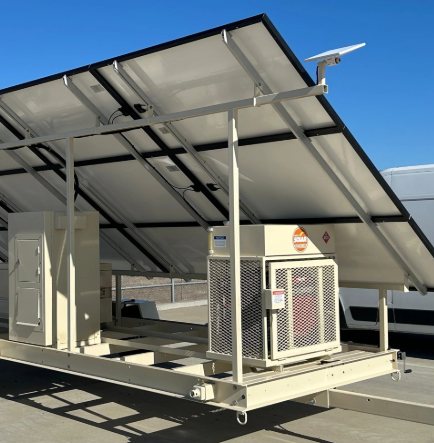
Whether you need standby power or you want to store energy for later use, you have options. Solar panels can generate electricity during sunny conditions, batteries can hold power for later use, and standby generators can produce power during an outage. Systems such as the Generac PWRcell can also integrate storage with intelligent home energy controls.
Understanding what each technology does (and doesn’t do) can help you build a backup-power plan suited to Arizona heat and your household’s electrical needs. So, let’s take a look at your options.
What Solar Panels Provide
Solar panels generate direct-current electricity when sunlight reaches the photovoltaic cells. An inverter converts that electricity into alternating current that household appliances can use.
During normal conditions, solar energy can reduce the amount of electricity purchased from APS or SRP. Excess production may be exported to the grid or stored in a compatible battery, depending on the system and utility arrangement.
However, solar panels alone generally won’t keep a home powered during a utility outage. Standard grid-connected solar systems must shut down when the grid fails so they do not send electricity onto utility lines while crews are making repairs. Homeowners need appropriately designed battery storage, special controls, or another approved backup source to use solar energy when utility service is unavailable.
What Home Battery Storage Provides
A home battery stores electricity generated by solar panels or supplied by the grid. During an outage, the stored energy can be directed to selected household circuits.
Battery systems are quiet and do not require gasoline, propane, or natural gas while operating. When connected to solar panels, they may recharge during a daytime outage, allowing the household to use stored energy again after sunset.
The current Generac power cell system is the Generac PWRcell 2, and it can store electricity from solar panels or the grid. The system is designed to provide backup power, reduce energy costs, and help you use stored electricity when utility rates are higher. It includes battery modules, an inverter, a smart disconnect switch, load-management equipment, and a smart thermostat.
A single Generac power cell battery cabinet provides between 9 and 18 kilowatt-hours of storage. Two cabinets can be connected to one inverter for up to 36 kilowatt-hours. The system can provide up to 10.5 kilowatts of continuous power when configured with two cabinets and the required number of battery modules.
What a Standby Generator Provides
A permanently installed standby generator monitors utility service and starts automatically when an outage occurs. An automatic transfer switch disconnects the home from the utility grid and connects selected circuits or the electrical service to the generator.
Unlike a battery, a generator does not have a fixed quantity of stored electricity. It can continue producing power as long as it has an adequate natural-gas or propane supply and remains within its operating limits.
That makes standby generators well suited to longer outages and homes with large continuous loads. Depending on the generator’s capacity, a system may support air conditioning, refrigeration, lighting, security systems, pool equipment, and other important circuits.
Comparing Backup Options
Here’s how the three energy solutions compare.
| Technology | Primary Benefit | Main Limitation | Outage Role |
| Solar panels | Generate electricity and may reduce utility purchases | Usually shut down during outages without compatible backup equipment | Recharges batteries when the sun is available |
| Battery storage | Quiet, immediate backup with no onsite fuel consumption | Stored energy is finite unless the battery can recharge | Supports prioritized circuits for a limited duration |
| Standby generator | Can support longer outages and larger loads | Requires fuel, maintenance, and engine operation | Produces power for as long as fuel remains available |
Costs for each of these options can vary quite a bit. A recent article in the Washington Post reported that a typical installed standby generator may cost approximately $7,000 to $15,000, while a home battery system may cost roughly $10,000 to $20,000. Adding rooftop solar could increase the total by approximately another $20,000. Actual prices depend on capacity, equipment, incentives, installation conditions, and electrical upgrades.
See also: The Easy Route: Booking a Bus to Penang
Choose Based on the Outage You Want to Prepare For
Which solution or combination works best for you depends on how you want to use power, considering costs. For example:
- A battery may be appropriate for quiet backup of selected circuits or for homeowners who want to store solar energy.
- A standby generator may be preferable when maintaining air conditioning and other large loads through a long outage is the primary concern.
- A combined system can offer greater flexibility but involves a higher initial investment and more complex installation.
Before purchasing a Generac power cell, solar array, or standby generator, you should complete a thorough energy assessment and load calculations. The review should consider daily electricity use, HVAC loads, essential circuits, expected outage duration, fuel availability, roof conditions, available installation space, and budget.
George Brazil Plumbing & Electrical can help East Valley homeowners evaluate standby power needs and determine how generator backup may fit into your home energy strategy. Schedule an assessment with George Brazil today.



 Semaglutide vs. Tirzepatide: Understanding the Differences in Weight-Loss Treatment