Water damage is a common problem for homes and businesses across Southern California due to aging infrastructure, coastal humidity, and sudden plumbing failures. When water enters a property, owners often face a choice between handling cleanup themselves or calling trained professionals. This decision can affect structural integrity, indoor safety, long-term repair costs, and how quickly a space returns to normal use. Many people underestimate how complex water damage can become once moisture spreads beyond visible surfaces. Understanding the differences between professional restoration and DIY cleanup helps property owners make informed and realistic decisions.
Understanding the Nature of Water Damage in Southern California
Water damage in Southern California often behaves differently than in cooler or drier regions. Warm temperatures can accelerate mold growth and cause moisture to spread quickly through walls, floors, and ceilings. Even a small leak can move through building materials within hours, making surface drying unreliable. DIY cleanup usually focuses on what can be seen, while hidden moisture remains trapped behind finishes. A professional restoration company in SoCal is trained to assess how water migrates through structures and how local climate conditions affect drying.
See also: Plumbers in Townsville Share Tips to Maintain Your Home’s Plumbing System
The Risks Involved with DIY Water Damage Cleanup
DIY cleanup carries risks that are not always obvious at the start. Standing water may contain contaminants from plumbing systems, ground seepage, or building materials. Without proper testing, homeowners may expose themselves to bacteria, irritants, or unsafe residues. Incomplete drying can weaken timber framing and lead to odors or future mold issues. These risks often emerge weeks later, long after the initial cleanup feels complete.
Professional Risk Assessment and Mitigation
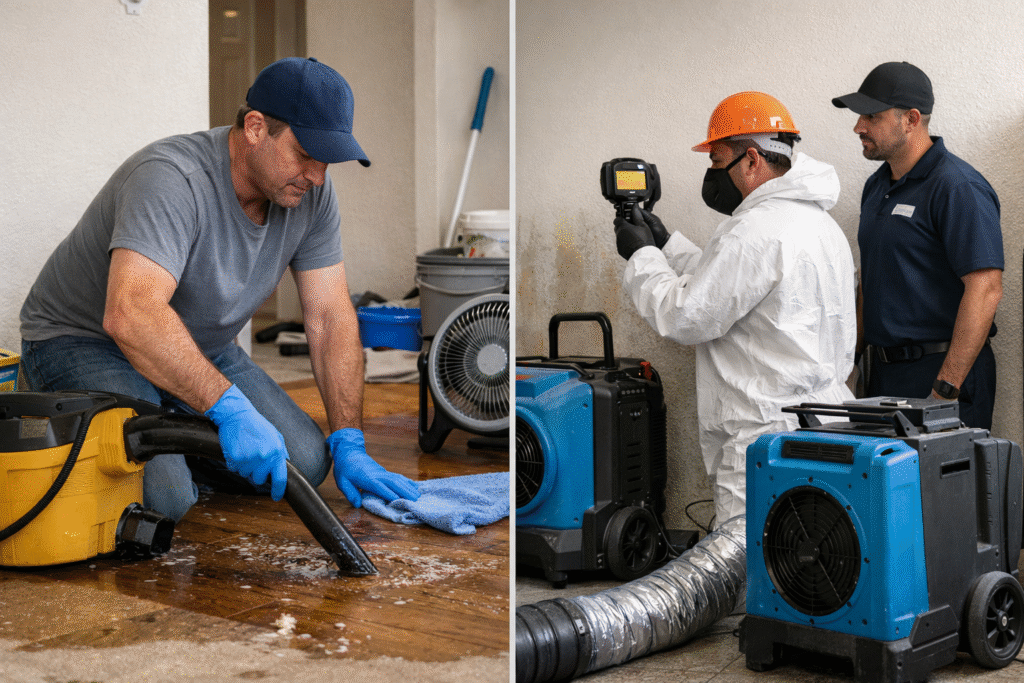
Professional restoration teams begin with a structured inspection that identifies both visible and hidden damage. Moisture meters, thermal imaging, and humidity readings provide data that guides each step of the process. This approach reduces guesswork and helps prevent secondary damage. Experienced technicians understand how different materials respond to water exposure over time. Risk mitigation becomes proactive rather than reactive, which is difficult to achieve with DIY methods.
Tools and Equipment Used in DIY Cleanup
Most DIY water cleanup relies on household tools such as wet vacuums, fans, towels, and portable dehumidifiers. These tools can remove surface water but lack the power to extract moisture from dense materials. Air movement from standard fans often dries the surface while leaving deeper moisture untouched. Consumer-grade dehumidifiers struggle to control humidity in larger or enclosed spaces. As a result, drying may appear successful while internal moisture remains.
Professional Restoration Equipment and Technology
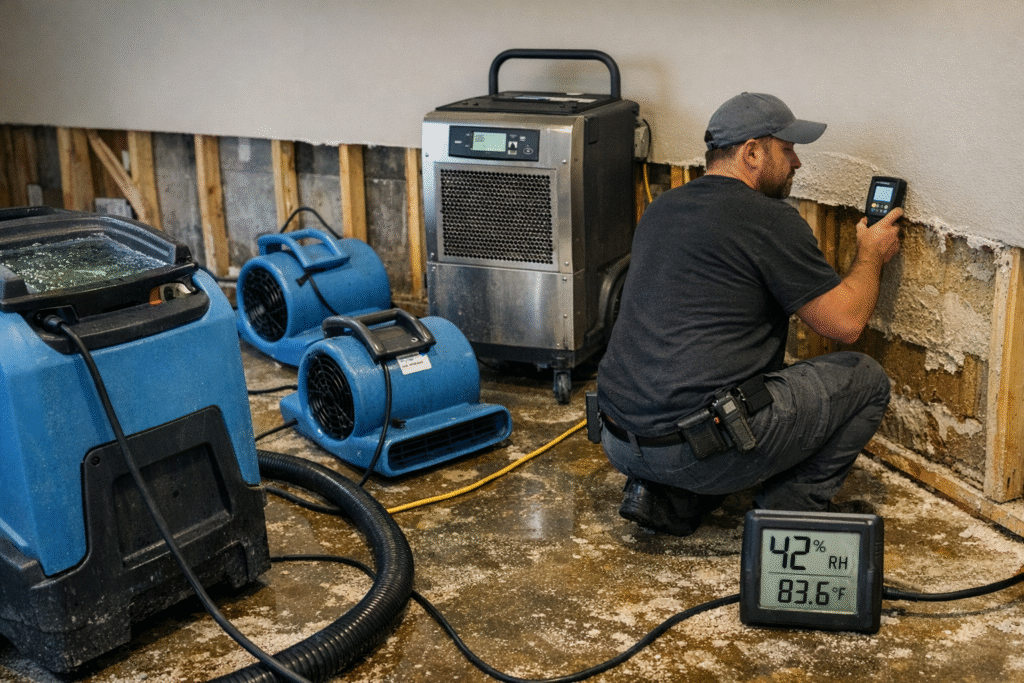
Professional restoration uses industrial extraction units, high-velocity air movers, and commercial dehumidifiers designed for structural drying. These tools work together to control airflow, temperature, and humidity. Equipment placement follows established drying principles rather than convenience. Technicians adjust settings daily based on moisture readings and environmental changes. This controlled process shortens drying time and reduces the risk of long-term damage.
Cost Perception Versus Actual Expense
DIY cleanup often appears cheaper at first because it avoids service fees. However, hidden moisture can cause damage that leads to costly repairs later. Replacing flooring, drywall, or cabinetry weeks after an incident often costs more than professional drying would have. Insurance claims may also be affected if damage worsens due to improper mitigation. Initial savings can disappear once secondary damage is discovered.
Professional Costs and Value Over Time
Professional restoration involves upfront costs that reflect labor, equipment, and expertise. These costs are often offset by reduced repair needs and faster recovery times. Proper documentation and drying records can support insurance claims and limit disputes. Long-term value comes from preventing repeated issues rather than addressing the same problem twice. When evaluated over time, professional services often provide better financial predictability.
Safety Considerations for Property Owners
Safety is a major concern during water damage cleanup. Wet environments increase the risk of electrical hazards, slips, and structural instability. DIY efforts may overlook compromised flooring or weakened ceilings. Protective equipment is rarely adequate for prolonged exposure to damp or contaminated areas. Safety risks can escalate quickly without proper training.
Safety Standards in Professional Restoration
Professional teams follow established safety protocols to protect both occupants and workers. Power sources are assessed before equipment is deployed. Personal protective equipment is selected based on water category and exposure risk. Work areas are stabilized before drying begins to prevent accidents. These practices reduce the chance of injury and secondary incidents.
Short-Term Results Compared to Long-Term Outcomes
DIY cleanup often delivers quick visual improvement, which can feel reassuring. Unfortunately, visual dryness does not equal structural dryness. Moisture left behind can cause warping, and microbial growth months later. Long-term outcomes depend on thorough moisture removal rather than speed alone. Professional restoration focuses on durability, not just appearance.
Structural Integrity and Building Materials
Different materials absorb and release moisture at different rates. Drywall, insulation, and engineered wood products are especially vulnerable to prolonged dampness. DIY approaches rarely account for material drying requirements. Professionals evaluate whether materials can be dried in place or must be removed. This decision protects structural integrity and prevents future failures.
Impact on Indoor Environment Quality
Residual moisture affects indoor air quality and comfort. Damp materials can release musty smells and increase humidity levels. DIY cleanup may not address these environmental changes fully. Professional drying stabilizes humidity and reduces the likelihood of lingering odors. A healthier indoor environment supports normal occupancy sooner.
Response Time and Emergency Situations
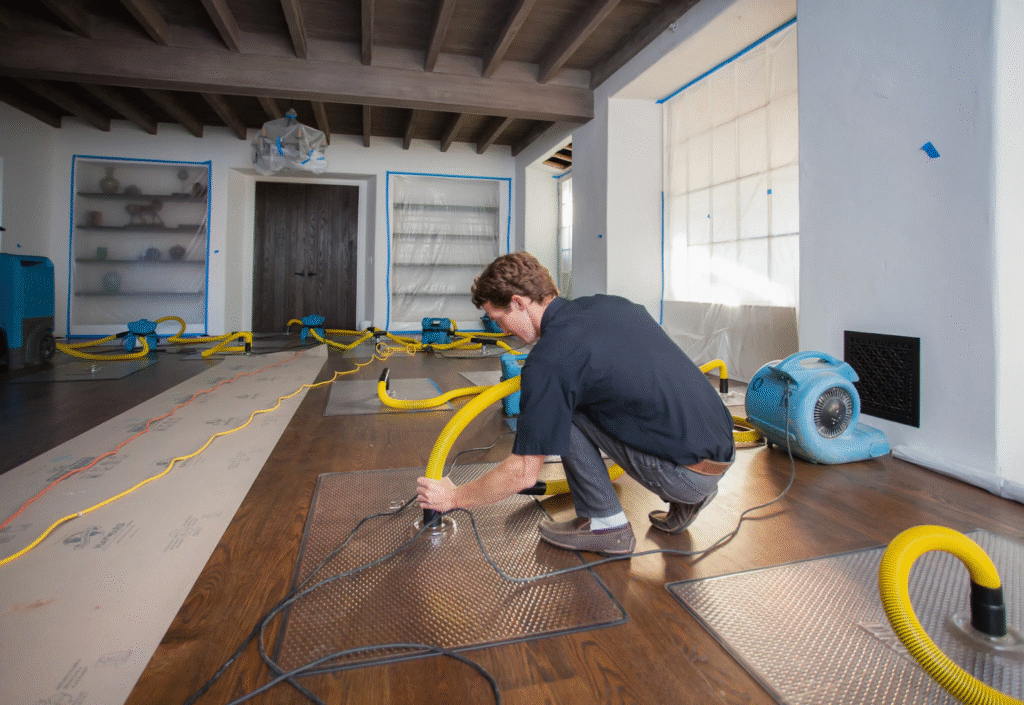
During major leaks or flooding, response time is critical. DIY efforts may be delayed by the need to source equipment or gather help. Water continues to spread during these delays. emergency water damage restoration in SoCal is designed for rapid deployment when minutes matter. Faster intervention limits damage and shortens recovery time.
Decision Making Under Pressure
Stress often influences decisions during water damage events. Property owners may underestimate the severity of the situation or overestimate their ability to manage it. DIY cleanup can feel empowering but may not match the complexity of the damage. Professional guidance provides clarity during uncertain moments. Informed decisions reduce regret and unexpected outcomes.
Insurance and Documentation Considerations
Insurance claims often require detailed documentation of damage and mitigation steps. DIY cleanup rarely includes moisture logs, equipment records, or professional assessments. Missing documentation can complicate claims or reduce coverage. Professional restoration provides structured records that align with insurer expectations. This transparency supports smoother claim processing.
Long-Term Property Value and Confidence
The way water damage is handled affects future property value. Buyers and inspectors often look for signs of past moisture issues. Incomplete drying can leave traces that raise concerns years later. Professional restoration aims to restore confidence in the building’s condition. Properly managed damage becomes a resolved event rather than a lingering question.
Choosing the Right Approach for Your Situation
Not every water incident requires the same response. Minor spills may be manageable with basic cleanup if addressed immediately. Larger leaks, sewage exposure, or structural saturation demand professional intervention. Understanding the scale and risks involved helps guide the choice. The goal is to protect the property, occupants, and long-term usability without relying on guesswork.