

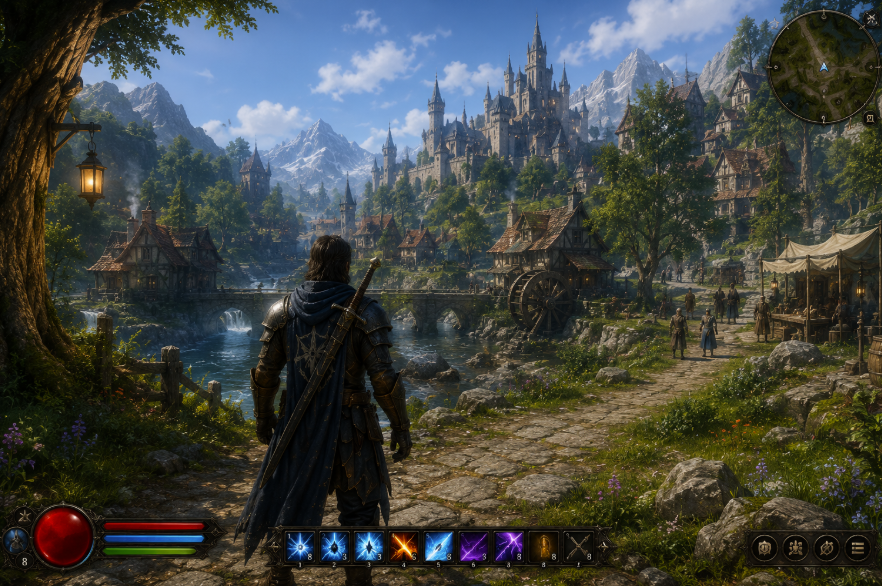
Bought a hardcore raiding game once because a friend wouldn’t shut up about it. Terrible fit. All I wanted was to wander around, read some lore, and poke at side content whenever I felt like it. This thing wanted me logged in on time, three nights a week, with a min-maxed build ready and zero patience for anyone dragging the group down. Refunded it inside a week. Felt kind of dumb, honestly, for not checking any of that before handing over money. Learned the lesson the expensive way, and talking to other players since then, it turns out a lot of people have some version of this exact story.
Finding the right online RPG isn’t really about hunting down the best one; there’s no such thing. It’s about finding whichever one actually fits how you like spending your time. Sounds obvious once you say it out loud. Still, a surprising number of people skip this step completely and just grab whatever’s trending or whatever a buddy recommended, never checking if the actual gameplay loop fits their real life at all.
Combat-Focused vs. Story-Focused RPGs
This is probably the biggest fork you’ll hit and is worth being brutally honest with yourself about which side you land on. Combat-focused online RPGs build nearly everything around fighting mechanics, optimizing your build, and mastering fight patterns. A story’s usually there, sure, but often just functional, more of a scaffold holding combat encounters together than something meant to be savored. It’s not that these games ignore narrative entirely, just that it takes a back seat to whatever’s happening in the encounter itself.
If theorycrafting builds, chasing better gear, and testing your skill against genuinely hard mechanics sound fun to you, combat-focused games are going to reward that a lot more than anything story-heavy ever could. Deep systems are worth mastering, and satisfaction comes from actually getting better at something difficult over months of play.
Story-focused online RPGs flip that priority completely. Combat exists to serve pacing and stakes, not the other way around. These games pour effort into dialogue, branching choices, companion relationships, and world lore, sometimes at the cost of combat depth hardcore players might find thin by comparison. If you’re the type who actually reads item flavor text or gets weirdly invested in a companion’s personal arc, this is where you’ll be happiest.
Plenty of games try blending both; results are mixed honestly. Worth actually digging into a specific title’s balance rather than assuming a “hybrid” label means it’ll satisfy both crowds equally. Some genuinely nail it. Most end up mediocre at both instead of great at either.
See also: How Technology is Helping IVF Doctors in Noida Improve Success Rates
Time Commitment Considerations
Be honest with yourself here; this is where a lot of players end up mismatched with a game that’s otherwise a perfect taste match. Some online RPGs revolve around long structured sessions, scheduled raid nights, and coordinated guild events, content basically demanding a chunk of your evening at a set time. If your schedule can’t reliably show up for that, even a genuinely great game in this style becomes a source of frustration fast.
Other online RPGs go the opposite direction, built explicitly around flexible, bite-sized sessions. Quick daily quests, solo-friendly content, systems that don’t punish you for logging in twenty minutes instead of three hours. Tends to suit people juggling unpredictable schedules, shift work, or just less free time to throw at gaming these days.
Catch-up mechanics matter more than people expect too; they are easy to overlook when first checking out a game. Some titles get brutal about returning after a break, gating content behind grinds assuming daily consistent play. Others build in generous systems specifically so players stepping away for weeks or months can jump back without feeling permanently left behind. If life doesn’t allow perfectly consistent play, checking how forgiving a game is about breaks before committing saves a lot of future headaches.
Community and Support Factors
Who you’ll be playing alongside matters just as much as the mechanics, sometimes more honestly. A mechanically brilliant online RPG stuck with a toxic or dying community can turn into a genuinely miserable experience, while a rougher game with a warm, active community often becomes the one people stick with for years.
Checking community health before sinking serious time in is worth the effort. Population numbers on official forums or subreddits give a rough read on whether a game’s thriving or on life support. Reading recent community discussions instead of just marketing material tends to reveal a lot about whether a playerbase is generally welcoming or notoriously rough for newcomers trying to break in.
Developer support matters too; it’s easy to underestimate how much this shapes long-term enjoyment. Games with active, communicative dev teams tend to stay healthier over time, fixing balance issues, shipping content that actually matters, and listening to feedback instead of going quiet for months. Checking a game’s patch history and how the team communicates can tell you a lot about what your experience will probably look like a year down the line, not just launch week.
Guild and group-finding tools shape things more than people expect going in too. Some online RPGs make it genuinely easy to find like-minded players through solid matchmaking and recruitment systems. Others leave you to fend entirely for yourself, which can feel genuinely isolating if you don’t already have a friend group ready to jump in beside you. Checking whether a game has active recruitment channels or a built-in finder tool before committing can save you from spending your first few weeks feeling like you’re playing entirely alone in a world built for groups.
Trial Periods and Free Weekends Are Worth Using
A lot of players skip trials and demo weekends entirely, jumping straight to buying off trailers and hype alone. Honestly, that’s a mistake more often than not. Trailers get edited to show the most exciting five minutes, not the actual hour-to-hour grind you’ll be living with for dozens or hundreds of hours if things go well.
Most major online RPGs offer some flavor of trial access these days, whether that’s a limited free tier, a timed trial, or occasional free weekend events. Using these properly means actually testing whatever matters most for your playstyle instead of just rushing the tutorial. Does social play matter to you? Try joining a guild during the trial. Is combat depth the deciding factor? Push into harder content instead of coasting through easy zones that don’t reflect what the game demands later.
Reviews from outlets like GameSpot’s review section offer a decent starting point for narrowing candidates before even reaching the trial stage, though cross-referencing professional reviews against real player sentiment on forums matters too, since a reviewer’s ten hours rarely captures what a game feels like a hundred hours in, which matters way more for online RPGs than shorter single-player titles.
Community-run comparison threads and genre roundups, the kind PC Gamer covers regularly, can also help narrow a shortlist faster than trying every trending title yourself one by one. Cross-referencing a few different sources tends to paint a way more accurate picture than trusting any single review or recommendation alone.
A Good Starting Point
With so many online RPGs fighting for attention, figuring out which one actually fits your playstyle before sinking dozens of hours in takes a bit of upfront digging. Reading past the marketing copy, checking real community sentiment, and understanding a game’s core loop before buying saves a lot of the frustration I dealt with on that ill-fated raiding purchase.
For breakdowns of different online RPGs and honest takes on which playstyles they actually suit, Pelithub is a solid place to start digging before committing your time and money to something that might not fit how you actually want to play.
Conclusion
There’s no universal “best” online RPG, only the one that actually fits how you want to spend your time, whether that’s chasing optimal builds through brutal encounters, losing yourself in a branching story, or just logging in casually to chat with people who’ve become genuine friends over the years. Taking time to figure out what you actually want before buying keeps you from becoming another player quietly refunding a game a week in, wondering why something everyone else loved just never clicked. A little upfront honesty about your own habits, more than any review score or trailer, ends up being the thing that actually decides whether a game sticks or gets shelved after a weekend.


 The Ultimate Guide to Creating a Relaxing Home Fragrance Experience