

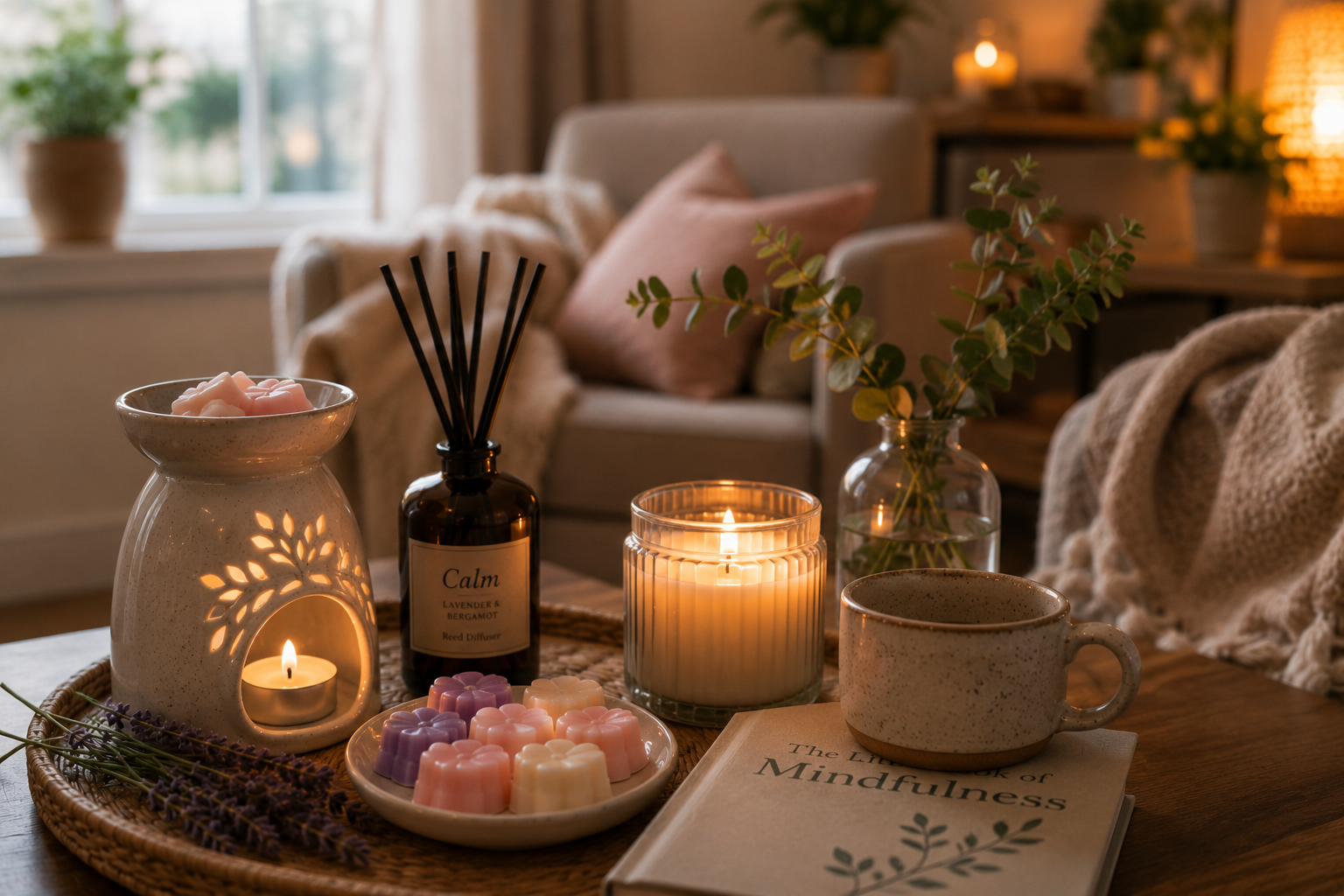
There’s a specific smell that still gets me every time. Old paperbacks mixed with something faintly floral from my nan’s front room. I couldn’t tell you the last time I actually sat in that room, but the smell alone brings the whole thing back: the chair by the window and the sound of the radio she always had on low. That’s kind of the whole point of this guide, really. Home fragrance isn’t just about making a room smell nice for guests. Done right, it changes how the room feels to be in, full stop. back:
Most people default to whatever’s on offer at the supermarket without thinking much further than “smells okay.” Fine for some rooms, honestly, but if what you’re after is actual relaxation, it takes a little more intention than grabbing the first vanilla candle you see.
Why Scent Affects Mood
Smell works differently from your other senses. It bypasses a lot of the usual processing and goes almost directly into the part of your brain handling memory and emotion. Sight and sound take a longer route. That’s presumably why a single whiff of something can drop you straight back into a memory before you’ve even worked out what the smell is.
Warm, familiar scents tend to signal safety to your body pretty much instantly, before your conscious brain’s caught up. Sharp or overly synthetic smells can do the reverse — put people slightly on edge without them ever clocking why the room feels “off.” It’s not usually dramatic. Just a low hum of unease sitting underneath everything.
See also: How Hiring Local Plumbers Transforms Your Home Maintenance
Choosing Relaxing Fragrance Notes
Lavender’s the obvious one, and it works for plenty of people, though not everyone gets on with it (my mom reckons it smells like a doctor’s waiting room; no idea why). Sandalwood and warm vanilla suit people after something cozier rather than sharp and clean. Chamomile’s underrated too, in my opinion, softer than lavender but still does the calming job.
If sweeter scents aren’t your thing, eucalyptus with a touch of mint reads more like a deep breath than a hug, if that makes sense. There isn’t really a correct answer here. Comes down to trial, error, and probably a few candles you’ll never light again.
Best Home Fragrance Products
Wax melts are the easiest way in if you want control without faff; no flame is involved, they are easy enough to swap between scents, and you can go heavier or lighter on the throw just by using more or less wax. Wax melts like these suit people who like changing things up depending on mood or season.
Reed diffusers are the set-it-and-forget-it option, which some people prefer, though you lose a lot of control once it’s poured and sitting there. Candles carry a bit of ritual with them; lighting one at the end of a long day does something separate from the scent itself, more about the act than the fragrance. Room sprays are for quick fixes, useful before guests turn up, though they don’t stick around long. None of these is really “the best” one. It depends on what you’re actually after, control, effort, or atmosphere.
Creating a Spa-Like Atmosphere
Scent does most of the heavy lifting, but not all of it. Pair something like eucalyptus or a soft floral with dim lighting, and you’re most of the way to that spa feeling without spending a fortune redoing the actual room.
Layering a couple of methods, a candle here and a diffuser running somewhere else nearby, builds more depth than relying on one single scent hitting you all at once. Room temperature plays a role too, more than people tend to realize. A slightly warm room holds fragrance better than a cold one, which is probably why everything smells stronger once the heating’s on in winter.
Seasonal Fragrance Ideas
Preferences shift with the seasons, whether people clock it consciously or not. Winter tends to pull toward spice, cinnamon, clove, and that whole vague “something’s baking” category that just fits once it’s dark by four in the afternoon.
Spring nudges things toward florals and fresher, greener notes, almost mirroring whatever’s happening outside the window. Summer’s usually citrus-led, lighter stuff that doesn’t sit heavy once the room is already warm. Autumn sits somewhere between the two, often a bit woody or lightly spiced without going full winter mode yet. That said, plenty of people just stick to one favorite scent year-round, and there’s nothing wrong with that either.
Fragrance Safety Tips
A handful of basics worth keeping in mind, even if they sound obvious. Never leave a candle or warmer running unattended, easy to say, but people slip up on this constantly, especially with electric warmers that feel safe purely because there’s no visible flame.
Keep anything scented well away from curtains, paper, or anything flammable nearby, and let rooms breathe occasionally rather than sealing scent in for days on end. If anyone in the house deals with asthma or general sensitivities, lighter and more natural fragrance oils tend to sit better than heavily synthetic ones. It’s worth checking what you’re buying too; some of the cheaper stuff cuts corners on oil quality, and that shows up fast as headaches or a slightly off chemical edge instead of the cozy smell you were hoping for.
Conclusion
None of this needs to be complicated or expensive, really. Pick notes that actually suit how you want the room to feel, use more than one method instead of relying on a single candle to do everything, and pay a little attention to the season. Get that much right, and a house starts to feel calm the moment someone steps through the door, the same way my nan’s front room still does, even now, just from the memory of it.



 Your Employee Badge Is Dying: Why Mobile Credentials Are Becoming the New Workplace Identity in Oman