I was interviewing a property manager a couple years ago for something completely unrelated, some piece about parking lot maintenance actually, and he said something in passing that stuck with me way longer than it probably should have. He mentioned that most of the complaints he gets from tenants have nothing to do with anything actually broken. It’s stuff like the hallway looking scuffed up, or the lobby smelling a bit stale even though nobody can point to why, or a bathroom that’s technically been cleaned that morning but somehow doesn’t feel clean when you walk in.
None of that is a repair problem. It’s a cleaning problem, and honestly it’s the kind that chips away at how people feel about a building way before anything mechanical actually stops working.
That comment is basically the whole point I want to get at here. Keeping a commercial space in good shape takes a lot more planning than just having someone come through with a vacuum once a week and figuring that covers it.
Daily Cleaning vs. Deep Cleaning
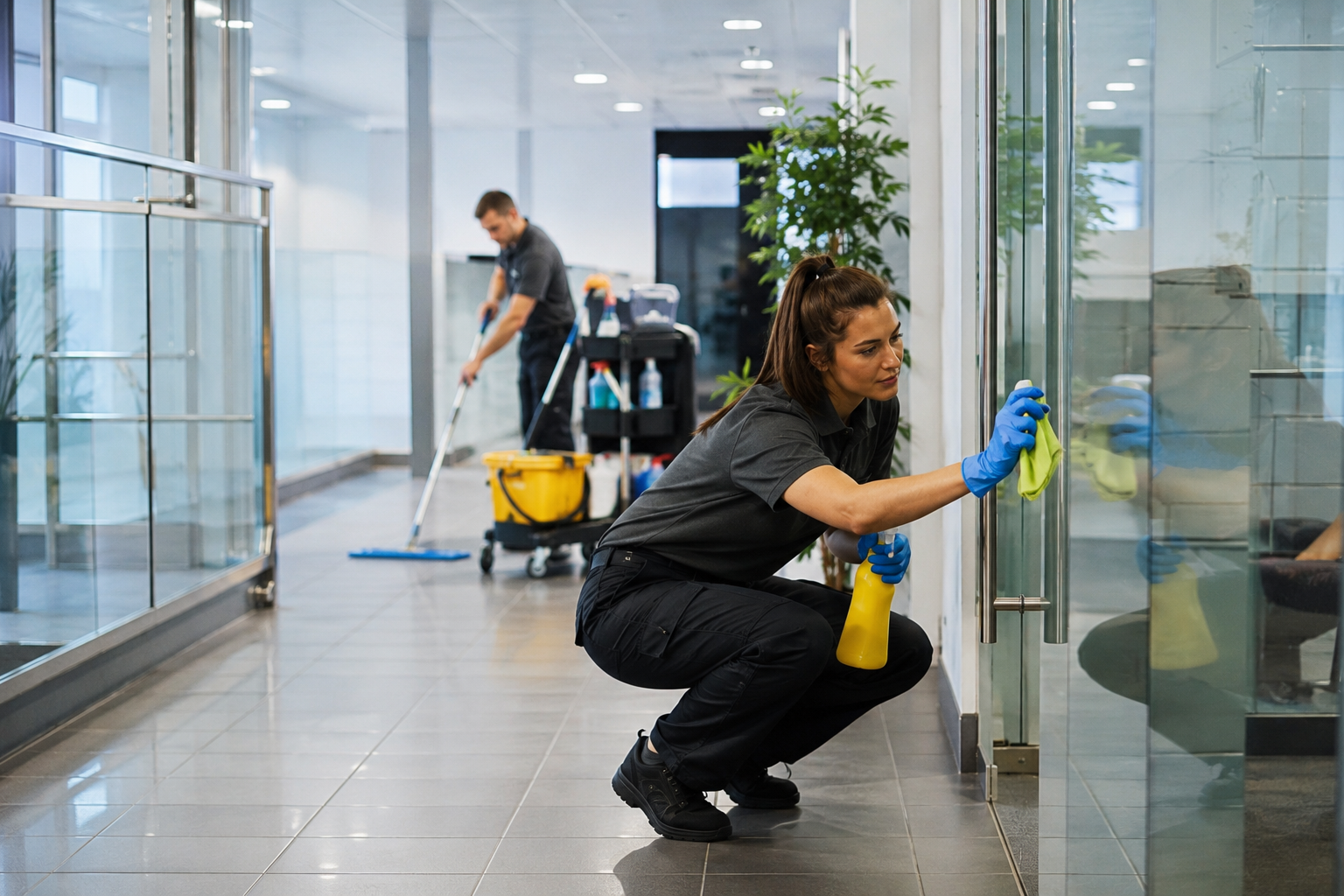
People tend to lump these together like they’re the same thing, and that’s part of where facilities go wrong honestly. Daily cleaning is the stuff that needs doing constantly no matter what: taking out trash, wiping counters and desks down, vacuuming the areas people actually walk through, and keeping washroom supplies stocked so nobody runs out midday. It’s upkeep. It stops a place from sliding backward, but it doesn’t really move things forward.
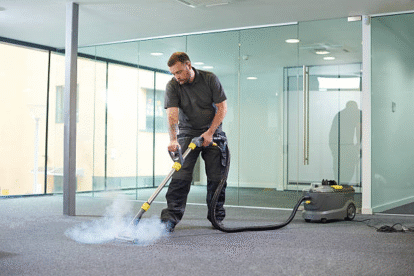
Deep cleaning is its own separate job. This is when carpets actually get shampooed instead of just vacuumed over the top; when someone finally scrubs the grout instead of mopping around it; and when vents and light fixtures that never get touched during a regular pass finally get some attention. Most places probably need this monthly; some quarterly is fine depending on how much traffic comes through, but skip it too long and you end up with a space that looks tired for reasons nobody can quite name.
A lot of businesses assume daily cleaning alone handles everything, and it just doesn’t. You can vacuum a carpet every single day for half a year, and it’s still slowly building up grime deeper in the fibers that a surface vacuum was never going to pull out anyway.
See also: Creating Harmony in Food, Health, Home Care, and Everyday Lifestyle
High-Touch Areas That Need Extra Attention
Not every surface carries the same risk, and treating them all the same is a mistake I see constantly. Door handles. Elevator buttons. Light switches. The shared office phone that six different people use throughout the day. Break room appliances everyone’s hands end up on at some point. These get touched constantly and end up being the main way germs move around a building.
A cleaning routine that actually accounts for this treats those spots differently than, say, a windowsill nobody’s touched in weeks. That means those high touch points need more frequent disinfecting, not just getting hit once during a broader cleaning pass and left alone until next time. Places that skip this distinction, that treat a doorknob basically the same as a baseboard, tend to see more sickness moving through the building, especially once flu season rolls around, when one overlooked surface can quietly kickstart an outbreak that nobody ever traces back to where it actually started.
Reception counters deserve the same kind of attention too, along with shared conference tables, since those get touched by employees and visitors constantly and almost nobody thinks twice about what was left there before they showed up.
Office, Retail, Warehouse, and Industrial Cleaning Needs
Worth saying outright that commercial cleaning isn’t really one job. It’s several jobs stuffed under one label, because what an office actually needs looks nothing like what a warehouse needs.
Offices usually care most about carpets, desk sanitation, keeping washrooms up to standard, and the kitchen or break room since that’s where most of the daily mess actually comes from, people sitting at desks all day and using shared spaces. Retail is a different animal; constant foot traffic tracks dirt and debris nonstop, plus the added pressure that the place has to look decent all day while customers are actually walking around in it, not just after closing when everyone’s gone home.
Warehouses and industrial spots bring a whole other set of problems. Heavier equipment. Way more square footage to cover. Grease from machinery and dust kicked up from whatever manufacturing process is happening build up faster and thicker than anything you’d find in a normal office. These places often need different equipment entirely and sometimes get cleaned overnight or on weekends, whenever operations actually slow down enough for someone to get into the areas that are otherwise being used nonstop.
A facility manager handling more than one type of property needs a cleaning partner who actually gets these differences instead of running the same playbook everywhere, because whatever works for a quiet accounting office isn’t going to translate to a busy distribution warehouse, and trying to force it usually just means both places end up worse off.
Why Preventive Cleaning Saves Money
There’s a pattern I keep noticing in facilities that let cleaning slip: small stuff that would’ve been cheap to fix early on turns expensive once it’s ignored for a while. A carpet stain left alone sets in permanently, and eventually the whole thing needs replacing instead of a quick spot treatment. Grout left unscrubbed darkens to the point where regular cleaning can’t touch it anymore, and you need specialized equipment, which costs more, obviously. HVAC systems clogged from dusty vents nobody bothered with end up working harder than they should and burn out faster, leading to repair bills that make regular cleaning look cheap by comparison.
Preventive cleaning works basically the same way preventive maintenance does for anything else. It costs money now, but way less than what you’d pay dealing with the fallout of ignoring it. Facility managers who look at cleaning as just another cost to shrink, instead of something worth actually investing in properly, almost always end up spending more eventually. It just gets spread out over time in a way that makes it hard to connect back to the original decision that caused it.
Partnering with Professional Cleaning Experts
Trying to handle all of this in-house, the daily stuff, the periodic deep cleans, keeping up with high-touch disinfection, and dealing with different needs across different kinds of spaces stretch most internal teams way too thin, especially in buildings that were never really set up with a dedicated cleaning staff to begin with.
This is usually where bringing in outside help actually makes sense. A company that specializes in commercial cleaning services in Canada brings trained people, proper equipment, and a level of consistency that’s genuinely hard to replicate with someone juggling this alongside a dozen other jobs. They also catch things an internal team might miss just because they’re too close to the space day in and day out to notice things sliding gradually.
The partnerships that work best aren’t just transactional either. There’s actual back and forth, adjusting the schedule as a business grows or changes, and a provider that actually bothers understanding what makes a specific space different instead of trying to fit it into whatever package is easiest for them to sell.
Setting Up a Realistic Maintenance Schedule
One thing that trips a lot of facility managers up is figuring out how often each type of cleaning should actually happen, without much of a benchmark to go by. There’s no single number that fits every building, but a few patterns show up often enough across different commercial spaces.
Entryways, hallways, shared kitchens, these usually need attention every day no matter what kind of facility it is. Washrooms fall into that bucket too, arguably even more so since people are less forgiving about hygiene there than almost anywhere else in a building. Deep cleaning tasks like carpet shampooing or vent cleaning tend to work on more of a monthly or quarterly rhythm, though places with stricter hygiene needs, healthcare being the obvious example, often need these done more often than a typical office would bother with.
The mistake to avoid is setting a schedule once and just leaving it alone forever. A facility that adds staff or expands or just gets used differently over time should probably revisit whether the old cleaning frequency still makes sense, instead of sticking with whatever got decided years back simply because nobody thought to question it since.
Signs a Facility Needs More Attention Than It’s Getting
Usually there are warning signs before a place fully slides into that neglected feeling the property manager was describing. Smells that don’t actually go away even right after a scheduled clean. Dust that seems to come back faster than it reasonably should. The same complaint from employees or visitors more than once, which honestly people don’t repeat unless it’s actually bothering them. Any of that usually means the current cleaning setup isn’t matching what the space needs anymore, whether that’s frequency or thoroughness or just a provider that isn’t following through consistently the way they said they would.
Catching this early and adjusting tends to be way less disruptive and way less expensive than waiting until it’s obvious to everyone walking in, at which point fixing it takes more time, more money, and sometimes leaves an impression on how the business is perceived that’s harder to undo than the actual cleaning issue ever was.
Conclusion
Keeping a commercial facility in good shape isn’t about running a vacuum through once a week and calling it a day. It’s several layers stacked together, daily upkeep, periodic deep cleaning, real attention to the surfaces people touch constantly, and an approach that actually fits whatever type of space is being maintained, whether that’s a quiet office or a warehouse floor that never really stops moving.
Businesses that take this seriously tend to avoid that slow, expensive decline that comes from letting things slip and usually end up saving money doing it, not just on repairs down the line but in the everyday experience of everyone walking through the door. For anyone weighing whether to bring in outside help, working with an established provider of commercial cleaning services in Canada is often the difference between a space that’s merely tidy and one that’s actually well kept. That property manager’s comment has stuck with me for a reason. Most complaints were never really about anything broken. They were about things that just never got properly looked after in the first place.