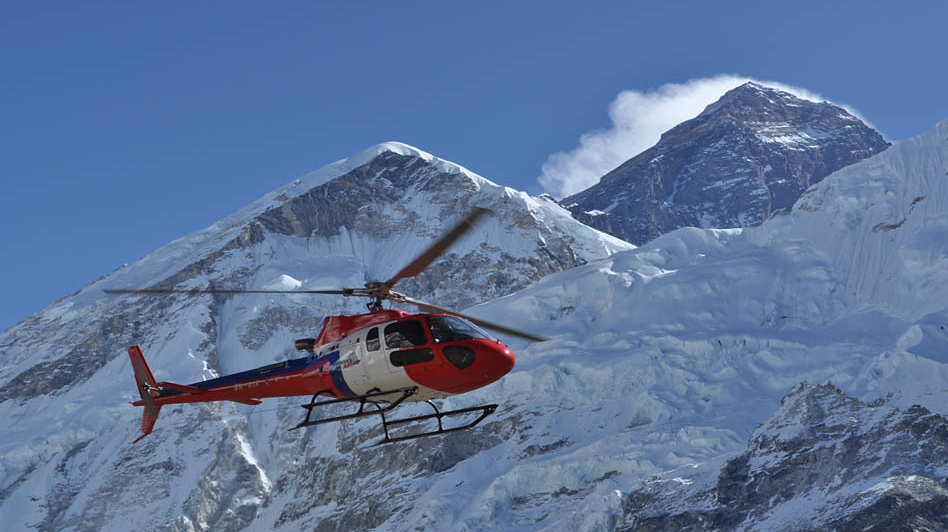
Everest Base Camp trek with helicopter finish is an 11 day tour which is organized to suit the travelers who desire to explore the Everest region in an easy and time saving manner. The trek starts with a brief flight to Lukla and then proceeds on foot over well-marked mountain trails. You go through small village, and walk along rivers and slowly climb the mountain, enjoying the peaceful atmosphere.
It is an achievement to reach the Base Camp of Everest at the altitude of 5364 meters, and this will provide a sense of accomplishment. You do not take the same path back but fly back using helicopter, and this saves you the physical effort, and you get to have a pleasant ride back to Kathmandu.
This Everest Base Camp trek by helicopter round trip is designed by Life Himalaya Trekking to suit people who would like to have a moderate combination of trekking and comfort. The helicopter return saves several days to the trip but remains sufficient enough to acclimatize properly.
This will make the trip worth considering those travelers with a limited time in the holiday who would still wish to go the whole way with the Everest experience. You will spend the night in good clean and comfortable tea houses in the trek. Hot lunch and dinner meals are provided and ensure that you remain active and calm on the trip.
The Everest Base Camp trek and helicopter return is planned and led by experienced local guides who know the terrain, weather and altitude. They take care of the day to day schedules and support at any point on the trek. Interactions on the route also provide trekkers with an understanding of Sherpa culture and life in the mountains. Namche Bazaar and Tengboche are some places that provide serene environment and cultural significance and thus the journey becomes worthwhile.
In general, this EBC trek with heli return is an alternative that suits any traveler who prefers to visit Everest Base Camp without a lengthy trek back. It provides stable walking days, good support, accommodation, and helicopter ride that completes the trip by giving a smooth finish. The trip is ideal to people who seek a rewarding mountain experience at an added comfort and efficiency.
Why Choose Helicopter Return Option?
A helicopter return during the Everest Base Camp trek will save you time and energy. Once at the Everest base camp, a few additional days of downhill strolling along the same path is needed via the usual route. Although the downward route might seem more comfortable, the knees and legs will be tired after several days of walking.
With a helicopter trip, you save this long walk back and return to Kathmandu within a few hours, depending on weather conditions and flight logistics. This renders the Everest Base Camp trek by helicopter return an ideal hiking experience that can be done by the traveler who wishes to make the most of his/her holiday without skipping on the relevant sections of the trek.
The helicopter return is also a more relaxed conclusion to the trip. Flying back, after days of constant walking and early mornings, will enable your body to rest earlier. This alternative is particularly beneficial to the travelers who might be exhausted upon reaching base camp or those that want a more comfortable move out of the mountain into the city.
The option of EBC trek with heli return further contributes flexibility to the schedule since there will be the chance of leaving the area much faster in case of weather or personal comfort issues. To a lot of trekkers, the assurance that they will be able to go back easily helps them to have peace of mind during the trek.
Why This Trek Is Different
This comfort Everest Base Camp trek with helicopter return is planned to provide a full trekking experience in a relatively more comfortable and shorter schedule. The time spent on the trip is eleven days compared to the usual seventeen days that the Everest Base Camp trek would take.
You take the old path, pass through the villages you have been to, and arrive at the Everest Base Camp by foot. The only difference is that you do not have to follow the same path on the way back which makes the journey more effective and less demanding.
The other significant aspect of this trek is comfort. Accommodation is chosen wisely so as to offer clean rooms, warm dining rooms, and good service. The teahouses provide a serene atmosphere that you can enjoy upon completion of arduous walking days in major points like Namche Bazaar and Dingboche among others.
Foods are made to encourage your energy requirements and adequate sleep is prioritized. Itinerary will also have acclimatization days which will make your body accustomed to the altitude gradually and will reduce chances of discomfort.
Generally, the Everest Base Camp trek with helicopter return is a favorable choice to those travelers who value a properly organized trip along with the convenience and savings of time. It includes moderate walking, cultural insights, and a unified helicopter ride that completes the trek with a serene and fulfilling result. This strategy will ensure the trek is more affordable and fun to more travelers.
Who Is This Trip Best For
The Everest Base Camp trek with helicopter return is suitable for many types of travelers. It is intended to provide a complete Everest experience and save time as well as give it an additional comfort. This renders it an excellent option to various groups:
Luxury Trekkers
In case you want luxury Everest base camp trekking then this trek is ideal. Modern teahouses and tea houses are providing clean rooms, hot food and relaxing environment after walking days. The helicopter return will be an added advantage and you will have sore mountains to play with without dire effort.
Limited-Time Travelers
The helicopter return will be advantageous to travellers who have a tight time schedule. The EBC trek with heli return lets you complete the full journey to Everest Base Camp without spending extra days walking back. This will allow one to enjoy the trek on an eleven day holiday, without leaving out the major highlights.
Senior Trekkers
The choice will be more convenient to older travelers or passengers who are sensitive to the physical aspects of such long descents. Instead of walking to Everest Base Camp, you now fly and this helps to cut the stress on the knees and other general tiredness. The speed is moderate and there are support staff members that may assist during the trek in case of need.
First-Timers Himalayan Trekkers
This package will be a full support package to those who are new in Nepal or trekking at high altitude. The numerous guided trekking, acclimatization days, and the possibility of a helicopter exit make it a safe and confidence-building means of reaching Everest Base Camp as a first-time visitor.
Honeymooners and Private Groups
The balance of adventure and comfort will be appreciated by the couples or close friends who want to have a memorable journey. You will be able to trek at your own speed with a personal guide, spend the night in cozy teahouses, and rejoice on arriving at base camp. The helicopter return is a very exciting and convenient end to the trip.
Overall, this comfort Everest Base Camp trek with helicopter return is ideal for anyone who wants a rewarding Everest experience in a shorter time, with extra comfort and reliable support throughout the journey.
Trip Information
Best Time for Everest Base Camp Trek with Helicopter Return (Seasonal Guide)
The Everest region can be trekked almost all year, but the best time for an Everest Base Camp trek with helicopter return is during spring and autumn. Spring March to May Spring is mild and there are rhododendrons growing on the trails. The skies are in good condition, and there is no rain especially during April thus it is a wonderful season to take photographs.
These months are also more active in Everest Base Camp as the climbers train to get to the summit. September to November, known as autumn, is a pleasant season with cold air and blue days, and the real landscapes after the monsoon in summer are beautiful. The most favorite month would be October because the days are pleasant to walk around and the nights are cold but bearable.
During the winter season (December-February), it can be trekked but the temperature is very low and there might be some snow fall. When there is a winter, the trails are less busy and this can be attractive to tourists who like being alone. The period between June and August is not the most pleasant season because of rains, low-sky conditions, and the possibility of canceled flights in Lukla.
However, one advantage of choosing the EBC trek with heli return during the monsoon is that you can avoid walking back through slippery trails and uncertain weather conditions. Overall, planning your Everest Base Camp trek with helicopter return in spring or autumn provides the best weather, stable trails, and a higher chance of a safe helicopter flight, ensuring a smoother and more enjoyable trekking experience in the Himalayas.
Weather and Temperature on Everest Base Camp Trek by Month.
The weather during the Everest Base Camp trek with helicopter return changes by season and altitude. The altitude of the lower places like Lukla is at a warmer level whereas the areas that are higher like Gorak Shep and the Everest Base Camp are a lot colder particularly at night. Being aware of the monthly weather assists you to plan a more comfortable and safe trip. The following is a basic guide on months.
January and February
These months are the coldest on the trail. When the sun is shining, temperatures in the Everest Base Camp can be as low as zero degrees Celsius during daytime. During the night it might drop down to a minimum of minus twenty degrees Celsius or below. Roads are empty and the skies are usually clear. The season is appropriate for trekkers who wish to avoid a large number of people and quiet trails.
March and April
Things gradually grow warmer. At Base Camp, the daily temperatures go down to minus five to five degrees Celsius. In lower ground, the flowers begin to bloom, and the walking is comfortable. This period is popular for those doing the Comfort Everest Base Camp trek with helicopter return due to stable weather.
May
The end of spring is warmer. During the day, temperatures in Everest Base Camp remain at a range of five to ten degrees Celsius. The afternoons may be cloudy and there are more climbers in the area. It is still a good time for an EBC trek with heli return, especially for those who enjoy a lively atmosphere.
June to August
This is the monsoon season. Lukla and Namche are usually found under rain and the sky tends to remain cloudy. The views of mountains are fewer, and the humidity is increased. Base Camp is characterized by a weather temperature of between zero to five degrees Celsius, and the weather may also include rain or snowfall. Daily weather conditions are very crucial in helicopter flights at the time.
September and October
Autumn provides clear skies and fresh air. The temperatures in Everest base camp during the day vary between zero and five degrees Celsius whereas during night it may fall as low as minus ten degrees Celsius or more. Visibility is very good, making this one of the best seasons for the Everest Base Camp trek with helicopter return.
November and December
These months are dry and cold. It is normally between minus five degrees Celsius during the day at Base Camp and sometimes below minus fifteen degrees Celsius at night. The number of trekkers who are on the trail is fewer, the weather is usually clear, and this is good to those travelers who seek a quiet experience.
Weather in the mountains is unpredictable regardless of the time of the year. Mornings during the Everest Base Camp trek with helicopter return are often clearer, while clouds tend to appear later in the day. Helicopter returns are carried out when the weather is safe and in most cases in the morning when visibility is good and flights are less difficult.
Fitness and Preparation Tips
You do not need to be a professional athlete to complete the Everest Base Camp trek with helicopter return, but having a good fitness level will make the journey more comfortable and enjoyable. The best way to keep a regular pace is to prepare your body beforehand and avoid exhaustion and be able to walk slowly on a daily basis. Practice building endurance and strength of legs before the trek. Regular walking, hiking, jogging or cycling are all quite beneficial.
Most trekking days entail five-six hour walks and hence, it is advisable to train on walking long hours with a light day pack. This will assist your body to adapt with the daily trekking routines. Basic strength training such as squats, lunges, and climbing stairs can be helpful in the development of the leg and core strength, particularly on uphill runs and downhill. Preferably, practice strenuous lifts with a heavy pack over rough ground or flights of steps to get used to it.
It is important to break in your hiking boots before the actual trip. New boots on the trail can produce blisters and discomfort. Performing physical training, appropriate preparation also consists of taking appropriate equipment. Carry brought with her changing clothes (layers), a warm jacket, gloves, and a hat.
Coming to Nepal a day or two beforehand will aid in getting back to normal after the travelling, it will also help in preparing any last minute arrangements. With good preparation and a positive mindset, the Comfort Everest Base Camp trek with helicopter return becomes a much smoother experience.
Altitude Sickness Prevention and Information
Altitude sickness is an important topic to understand during the Everest Base Camp trek with helicopter return. When the trail exceeds three thousand meters the quantity of oxygen available in the air reduces. This may have an impact on some trekkers particularly when climbing is too quick. Mild symptoms are common and these include loss of appetite, dizziness, tiredness, and headache.
The main techniques of preventing altitude sickness are adequate pacing and acclimatization. The EBC trek with heli return itinerary includes planned rest days at places like Namche Bazaar and Dingboche. Such rest days will enable your body to adapt to altitude. Short walks to the higher points are carried out in the daytime followed by a sleep at a lower altitude during acclimatization days.
It is very important to stay hydrated. Consume a lot of water during the day and do not consume alcohol or smoke as it will make people dehydrated. Do not rush but take your time and listen to your body. You should notify your guide in case you experience any symptoms. Guides are instructed on how to keep the health, check the level of oxygen, and make decisions depending on your condition.
In severe instances, the best solution would be to go down to a lower altitude. Helicopter evacuation is available if required, which adds safety to the Everest Base Camp trek with helicopter return. Diamox is carried by some trekkers although only after medical advice. On the one hand, it is possible to avoid the problem of altitude with safety and appropriate care and awareness.
Cultural Insights on the Trek Route
The Everest Base Camp trek with helicopter return is not only about walking through mountains but also about learning from the people who live in the region. The route goes through numerous Sherpa villages including Namche Bazaar, Khumjung and Pangboche. Hospitality, strength and closeness to the Himalayas are the characteristic features of the Sherpa community.
Buddhism is a significant part of everyday life here. On the path, there will be prayer flags, prayer wheels, and stone walls carved into sacred texts. One of the most significant places during the trek is Tengboche Monastery. The monastery is also a tourist spot frequented by lots of trekkers who come to see prayer sessions and the serene environment.
The trail has tea houses where a visitor can meet with the local families. Spending time with hosts through sharing of meals and conversations will enable you to know more about life in a village and mountain life. It is always welcome when people greet each other with a warm Namaste. At Namche Bazaar, you can learn about the history of mountaineering and local culture in the Sherpa Museum.
It is very important to respect customs. Wear clothes in a modest way, seek permission before capturing photos and take clockwise steps around religious monuments. By the end of the Comfort Everest Base Camp trek with helicopter return, many trekkers feel a strong connection to the local culture and people, making the journey even more meaningful.
Safety and Emergency Plan for the Trek
Safety is a major priority during the Everest Base Camp trek with helicopter return. Hiking through a professional guide and properly organized team also incorporates good support on the way. Guides are also trained in the first aid and altitude awareness and their duty is to check the health of the trekkers on a daily basis. The program is developed with adequate acclimatization and schedules.
Helicopter evacuation can be organized in the case of severe altitude sickness or injury. The helicopter return is not only convenient, but also a considerable safety measure. It enables quick access to medical care where necessary. Travel insurance which includes the emergency rescue by a helicopter at elevation up to six thousand meters is very important.
Close attention is paid to weather conditions and in particular to flights in Lukla and helicopter pickup days. In case of bad weather conditions, the plans can be altered and additional days of rest can be provided. In case of delays, guides help to keep the trekkers in secure places where they get the right food and accommodation.
The most important thing is clear communication. The trekkers are always advised to report discomfort or health problems to the guide. With proper planning, professional guidance, and an emergency plan in place, the Everest Base Camp trek with helicopter return can be completed with confidence and peace of mind.
Mobile Network, Internet and Charging Facilities
Staying connected during the Everest Base Camp trek with helicopter return is possible, though service becomes limited as you go higher. Mobile network in lower regions like Lukla, Phakding and Namche Bazaar are provided by the local companies. Namche also has some internet access points in certain areas.
The signal is less reliable and weaker as the trek goes higher. Connection is only occasional in such places as Gorak Shep and cannot be relied on completely. Most tea houses have satellite based Wi Fi with prepaid cards that one can buy on the trail. Internet speed is low and prices are high at elevated levels.
Most tea houses have charging facilities where people pay a little amount of money to charge their electronic devices. Electricity is usually generated through solar power hence supply can be affected by weather. To prevent the problem of charging, it is best to keep a power bank or spare batteries. It is also beneficial to carry an appropriate traveling-adapter.
Staying connected is an option, however, most trekkers prefer to restrict their use of phones and get to see the environment. The Comfort Everest Base Camp trek with helicopter return offers a chance to step away from daily distractions and focus on the journey, culture, and mountain life before reconnecting fully after returning to Kathmandu.
Don’ts on the Everest Base Camp Trek
To enjoy a safe and respectful Everest Base Camp trek with helicopter return, please keep the following don’ts in mind. These arguments contribute to safeguarding your health, local culture, and the environment.
• Do not neglect acclimatization
Do not go higher in case you do not feel well. Rest days should be avoided or climbed too fast to expose an individual to the chances of developing altitude sickness. Always follow your guide’s advice and allow your body enough time to adjust during the EBC trek with heli return.
• Do not overstrain yourself or become dehydrated
Take a slow, comfortable walk. Do not attempt to hurry or carry very heavy bags, porters can be employed to aid you. Take water frequently, as dry and cold air may dehydrate you even when you are not thirsty.
• Do not take alcohol or smoke at high altitudes
The use of alcohol and smoking may delay the process of acclimatization and deteriorate symptoms associated with altitude. They should be avoided during the trekking days and leave it until when you are back to lower altitudes.
• Do not litter on the trail
Everest region is an environmentally sensitive region. Take along all non biodegradable wastes and dispose them in the right disposal sites in villages. Plastic containers, wrapping papers, or tissue should not be left along the path.
• Do not disrespect local culture
Never take pictures of people or religious places without seeking their consent. Take off your shoes when going to monasteries or houses and also make things very quiet in villages.
• Do not leave the main trail
Use designated roads to ensure your safety and the safety of local plants. Do not walk out of trail and most so in the night or in steep places.
Following these points ensures your Comfort Everest Base Camp trek with helicopter return remains safe, respectful, and enjoyable.
Photography and Drone Rules
Photography is allowed and widely enjoyed during the Everest Base Camp trek with helicopter return, as the landscapes and village life offer many memorable moments. You can take pictures personally along the trail, but you need to be respectful. Ask first before taking close up shots of the locals, particularly of monks, elders or children. Majority of the people are pleased to be photographed in case they are requested nicely.
Other monasteries like the Tengboche only permit photography in some places. It is not necessary at all to take photos of prayers ceremonies unless it is demonstrated. It is also common that flash photography is not permitted within the monasteries because it can destroy the paintings on the walls and distort the serene atmosphere. Following these simple rules shows respect for local beliefs during the EBC trek with heli return.
The application of drones in the Everest area is highly regulated. Sagarmatha National Park is a conservation zone and the use of flying drones must be approved by the governmental bodies. Such permits are expensive and require to be scheduled long beforehand. It is not permissible to fly a drone without permission and may lead to fines or equipment seizure. Drones may also disrupt the wildlife and other trekkers in the trail.
Most travelers should always leave drones at home and use a camera or smartphone instead. Bring spare batteries, since low temperatures consume much energy. By respecting photography and drone rules, your Comfort Everest Base Camp trek with helicopter return will remain smooth, respectful, and stress free.
Travel Tips to Nepal First Time Visitors
If this is your first visit to Nepal, the following tips will help you adjust easily and prepare well for the Everest Base Camp trek with helicopter return.
• Visa on arrival
The visa can be obtained through Kathmandu airport by most travellers upon filling the form and paying the fee in US dollars. Having the precise amount and carrying a photo passport size can also help in making the procedure faster and less stressing.
• Currency and money
The currency of the country is the Nepalese Rupee and can be exchanged in Kathmandu or the airport. While ATMs are common in the city, they are not available on the trail, so bring enough cash for personal expenses during the EBC trek with heli return.
• Local etiquette
In Nepal, people welcome one another with a polite Namaste which is always welcome. Modesty and respect in temples, monastic and villages can be of assistance in relating to the communities.
• Health and food
It is not advisable to drink tap water unless it is treated, and therefore bottled or boiled water is best. Good hand hygiene and eating freshly cooked food can be used to prevent stomach problems when you stay.
• Transportation and safety
Geographically Kathmandu can be busy in the traffic and this may be very new to first time visitors. Travelling by registered cabs, negotiating fares beforehand, and ensuring that you leave your valuables in safe places will make you travel without fear.
These tips will help you feel comfortable before starting the Comfort Everest Base Camp trek with helicopter return.
Common Risks during the Trek
The Everest Base Camp trek with helicopter return is well supported, but understanding possible risks helps you stay safe and prepared.
• Altitude related issues
The higher the trail, the higher the chances of the trekkers getting altitude sickness. The slow walk, adequate water consumption and adherence to the period of acclimatization are basic to safe ascending.
• Injuries and exhaustion
The long walking periods on uneven surfaces may cause either fatigue or minor injuries. Trekking poles enhance balance and lessen the pressure on the knees, particularly on the downwoods.
• Weather changes
The weather in the mountains is unpredictable. Always have a waterproof jacket and a warm layer in your daypack to be prepared all day long.
• Yaks and trail traffic
The same trails are often used by yaks and mules to transport supplies. It is advisable to stand on the uphill side and leave them enough space to prevent accidents on the narrow paths.
• Stomach illness
Digestive discomfort may at times be triggered by changes in diet and water. This risk is significantly minimized by selecting properly cooked food and treated water.
By staying informed and prepared, your Everest Base Camp trek with helicopter return can be completed safely and comfortably.
Currency, ATM and Money Matters
Managing money properly is an important part of planning the Everest Base Camp trek with helicopter return. The Nepal currency is Nepalese Rupee and it is better to carry local money to cover most of the daily costs in Nepal.
ATMs are easily found in Kathmandu and the international debit or credit cards are accepted but the banks may charge withdrawal fees and have a daily limit on withdrawal. Exchanging some cash at the banks or the authorized money exchange counters in the city often gives better rates than the airport.
Once you leave Kathmandu and begin the EBC trek with heli return, cash becomes essential. ATMs are unreliable beyond Namche Bazaar and even there they may run out of cash or stop working. Tea houses, mini shops and services along the trail have a cash only policy, and foreign currency is not accepted in villages.
You need to carry enough rupees with you to cover drinks, snacks and hot showers, charging devices, Wi Fi cards and personal tips. For example, prices go up with altitude, since the supplies are brought by porters and animals. Water, soft drinks and snacks become significantly more costly in the higher villages.
While the Comfort Everest Base Camp trek with helicopter return package usually covers major costs like permits, accommodation, and meals, personal expenses are not included. Keep your cash in a zipped pocket or money belt and try to carry smaller notes as villages may not have change for larger bills. With proper planning, money issues will be stress free during the trek.
Solo Everest Base Camp Trek with Helicopter Return – Is It Allowed?
Yes, a solo Everest Base Camp trek with helicopter return is legally allowed in the Khumbu region. Unlike some restricted areas for trekking in Nepal, this region does not mandate solo trekkers to hire a guide or a porter. Independent trekkers can obtain the necessary permits and do the trek on their own, including a return by helicopter.
However, there is added responsibility with trekking alone. You need to do all the logistics yourself, including permits, flights out of Lukla, accommodation, helicopter arrangement, etc. If there are weather delays, or you are feeling unwell at high altitude you will be forced into making decisions for yourself without immediate support. This may be challenging, particularly to the first time visitors of Nepal or to individuals who are not conversant with high altitude trekking.
Although one can still trek alone, a large proportion of travelers continue to employ the services of a guide or a porter due to the security and comfort this is likely to provide. A guide will help in the day to day planning, contact with the local teahouses, medical examinations and helicopter timing arrangements in a cost effective way. Even solo trekkers often appreciate having local support during the EBC trek with heli return.
In summary, a solo Everest Base Camp trek with helicopter return is possible and legal, but it requires good preparation, confidence, and experience.Whether trekking alone or with assistance, careful planning and proper insurance are essential to ensure a safe and comfortable journey.
The Cultural Festivals on the Trail.
If your travel dates match local celebrations, the Everest Base Camp trek with helicopter return can also become a cultural experience.The Sherpa community has several important festivals celebrated in the Khumbu region and trekkers may come across them along the trail.
• Mani Rimdu Festival
Mani Rimdu is the most well known Sherpa festival and it is usually held in October or November at Tengboche Monastery and Thame and Chiwong. Over three days monks perform masked dances and religious rituals and visitors are welcome to watch respectfully. If your itinerary allows, reaching Tengboche during this time offers a meaningful look into Sherpa spiritual life during the EBC trek with heli return.
• Losar Sherpa New Year
Losar is celebrated in the end of February or beginning of March and is the Sherpa New Year. Villages celebrate family gatherings, prayers, singing and food, mostly indoors. Trekkers may notice prayer flags being replaced and a quietness in the atmosphere, as some teahouses may cut back on services for a short time.
• Dumji Festival
Dumji is celebrated in the month of June or July in villages such as Namche Bazaar and Khumjung. The festival is dedicated to Guru Rinpoche when the monks perform dances and the villagers gather for prayers and meals. While largely a local event, trekkers may be invited to view some of the ceremonies.
• National festivals have an impact on
Festivals like Dashain and Tihar are prevalent in Kathmandu but little signs like decorations or festive meals can be seen in villages. These subtle touches add cultural warmth to the Comfort Everest Base Camp trek with helicopter return.
Festivals are another way of planning your trek and enhancing your trek with a cultural aspect and lasting memories.
Helicopter Flight Delay and Cancellations Policy.
Helicopter flights in Himalayas are a very sensitive subject concerning weather conditions and safety is always a priority at all times. For the Everest Base Camp trek with helicopter return, flights usually operate in the morning when visibility is better and winds are calmer.Although sometimes despite careful planning weather changes may cause delays or cancellations, especially around Gorak Shep or Pheriche, where most helicopter pickups take place.
If the helicopter is not able to fly on the planned day because of bad weather, typically the practice is to wait for good weather. In many cases conditions improve after a few hours and the flight can go later the same day. If the weather does not improve the flight is usually rescheduled for the next morning. During this time, trekkers can stay at Gorak Shep or drop down to a safer and comfortable place like Pheriche or Dingboche.
When weather is unfavourable at higher altitude but clear lower down, then an alternate pick up point can be arranged. In rare instances, the helicopter only flies as far as Lukla, and onward to Katmandu by regular flight, as weather permits. Extra nights due to weather delays will typically be paid by the traveler, although some travel insurance policies will cover these costs.
Customization and Private Trips
One of the advantages of booking the Everest Base Camp trek with helicopter return through our company is the ability to customize the journey. While the standard itinerary typically spans a period of about eleven days, it is possible to modify the itinerary according to your own pace and fitness level or interests. Extra acclimatization days can be added or longer trekking days can be broken down to shorter and more relaxing walks.
Many of the trekkers opt to add side trips such as a visit to Everest View Hotel, to Ama Dablam Base Camp or even an extended trek to the Gokyo Lakes, given sufficient time. These additions can be utilized to have a more profound experience, but they must be planned carefully to make sure that the acclimatization is retained. Couples, families or small groups, who would like to have a flexible schedule and individual guides and porters, are also advised to take private trips.
Custom helicopter options are also available. Some people prefer to fly into the Everest region at the beginning of the trek and fly out by helicopter after reaching Base Camp. Others ask for scenic mountain flyovers on the return journey, weather and additional cost permitting. Clear communication with your trekking provider ensures your Comfort Everest Base Camp trek with helicopter return is planned safely and according to your preferences.
Comparison Normal EBC Trek vs. Helicopter Return Trek
Duration
A standard Everest Base Camp trek (in which you walk both to Base Camp and back) typically takes about twelve to fourteen days of trekking, plus days of travel and rest. In comparison, the Everest Base Camp trek with helicopter return involves trekking to Base Camp in about eight days and then flying back by helicopter, making the total trip around eleven days. This option helps in saving roughly three to five days which is useful for travelers with limited time.
Physical demand
Both the trekking options follow the same route to Everest Base Camp, hence the difficulty and altitude challenges on the way up are the same. The major difference is after reaching Base Camp. On the normal trek, you would have to trek back down for several more days, which may be tiring and tough on the knees. With the EBC trek with heli return, you avoid the long return walk and can rest your body after completing the trek, which many trekkers find more comfortable.
Cost
The classical Everest Base Camp trek is more budget friendly as it only includes ground services i.e. guides, porters, permits, accommodation and regular flights. The helicopter alternative is more expensive due to the high price of the helicopter used in the Everest area. However, many travelers feel the added comfort and time savings make the Comfort Everest Base Camp trek with helicopter return worth the extra cost.
Experience
The standard trek also offers you a closer experience of the villages since you go through the villages twice and taking more time to see the day-to-day life. Another highlight is the helicopter turnaround tour in the form of aerial view of mountains, glaciers and valleys. Both alternatives take a similar route to Base Camp and the alternative is a choice of time, money and individual preference.
Common Mistakes to Avoid on EBC Trek
Despite proper preparation, trekkers might commit minor errors which influence their experience. Being aware of these points will help make the Everest Base Camp trek with helicopter return safer and more comfortable.
• Overpacking
One of the most common errors is to carry too much weight, which can quickly lead to fatigue. Only stay with necessary things and leave some unnecessary clothes or gear at your Kathmandu hotel. A ten to fifteen kilograms duffel bag will suffice the trek.
• Using new gear on the trek
When you go on a trek with new boots or unproven equipment, you may develop blisters or sore spots. Wear in your hiking shoes long before you go and put on your backpack by taking long walks in the house. Comfortable and familiar gear makes a big difference during the EBC trek with heli return.
• Forgetting about acclimatization days.
The fact that you are feeling strong at the beginning of the trek does not imply that you need not rest in days. Acclimatization stops are well planned to assist in adaptation of your body to the elevation. Not doing them predisposes one to altitude sickness and may terminate your trek prematurely.
• Not drinking enough water
Thirst is usually lowered by cold weather and dehydration is frequent at elevated altitude. Those should drink water frequently during the day, as well as tea or soup. Proper hydration facilitates acclimatization and energy.
• Walking too fast
Hiking is not a race and speeding up the progress puts more risks of injury and elevation issues. Move at a moderate speed that lets one breathe easily and converse. It is always better to arrive at camp later and in a good condition.
• Poor weather preparation
In the mountains, weather changes rapidly, even on sunny mornings. The daypack should always have a waterproof jacket, warm-up, gloves, and hat. It is better to be ready so that you are not in discomfort with changes.
• Skipping travel insurance
The risk of lack of appropriate insurance is severe. High altitude trekking and helicopter rescue should be insured. It is an important part of planning the Comfort Everest Base Camp trek with helicopter return.
• Violation of local regulations and manners.
It is unsafe to leave a visible trail or disregard the guidance of the guides. Adhere to the local traditions, wildlife and rules in the park in order to preserve the environment and yourself.
Avoiding these mistakes helps ensure your Everest Base Camp trek with helicopter return is safe, enjoyable, and successful.
Optional Add Ons
Depending on your time and interests, you can personalize the Everest Base Camp trek with helicopter return by adding one or more of the following experiences.
• Visit Everest View Hotel
Everest View Hotel is a hotel that is 3,880 meters above Namche Bazaar and is frequently visited when people are doing acclimatization hikes. Several trekkers hike up to take tea or coffee with scenery of Everest and Ama Dablam. You can also spend the night and have an extra convenience and a stunning mountain location.
• Everest panorama flight extension
Some of the travelers decide to take a scenic mountain flight in Kathmandu after the trek. This morning airplane adventure brings extensive sceneries of the Everest and other significant mountains using a small airplane. It is a good alternative in case people would like to have an aerial perspective outside of the helicopter turn.
• Gokyo Lakes side trip
More days and good fitness Trekkers are able to continue their adventure to the Gokyo Valley. This is typically a three to four day addition that includes crossing Cho LaPass. The path is less traveled than the main one and can provide the sights of the turquoise lakes, glaciers, and the mountains around, and the helicopter pickup may be taken at Gokyo.
• Kala Patthar sunrise hike
Kala Patthar is one of the most preferable viewpoints of the Everest, and is frequently featured in the itineraries. Other trekkers prefer to climb it in the morning, during sunrise, to have better views and soft morning light. This increase may be made prior to the helicopter back-up in case of weather and timing.
Any add ons ought to be negotiated early since they might impact the itinerary and price. These options allow you to tailor the Comfort Everest Base Camp trek with helicopter return to match your interests and travel style.
Environmental Responsibility and Sustainable Trekking on Everest Base Camp Trek with Helicopter Return
Trekking in the Everest region comes with a collective responsibility to conserve the environment and honor local communities. During the Everest Base Camp trek with helicopter return, sustainable practices help preserve the landscape for future trekkers.One of the most valuable steps is the reduction of plastic waste.
Storing water in a reusable bottle using boiled or purified water will significantly decrease the usage of single use plastic bottles. A lot of teahouses have boiled water which is safe, and purification pills/ filters are convenient and efficient. Another major aspect of responsible trekking is waste management. All non-biodegradable wastes such as wrappers, batteries and personal hygiene items should be done by Trekkers.
The waste in tea houses is disposed of themselves, but none must be deposited on the path, or in the rivers. The availability of supporting teahouses powered by solar energy, correct waste containers, or environmentally friendly toilets would also help make the environment more friendly.
Sustainable trekking also implies benefiting the local people. In staying in locally owned tea houses, local meals, and purchasing of hand-made products directly by villagers will contribute to keeping income at the community level. The utilization of the local trekking companies during the journey also contributes to employment and conservation.
These steps can be very effective, such as responsible hiring of porters, the necessity to preserve the wildlife and flora. By following these practices, the Everest Base Camp trek with helicopter return becomes both rewarding and responsible.
Porter and Guide Support System
The Everest Base Camp trek with helicopter return relies on a strong team of guides and porters who ensure safety and smooth logistics. Normally, a single porter will be carrying the gear of two trekkers, making loads manageable and balanced. Limiting porter loads is a common way of protecting the health of most companies, typically with a range of about ten or fifteen kilograms per trekker. Weight limit is also a significant aspect of ethical trekking.
Guides are professionally trained, frequently licensed and familiar with first aid and awareness of altitude. A lot of them are local Sherpas or the areas surrounding it and have a great insight into the land, culture and lifestyles of the trail. They assist in controlling the schedule, health care, and contacts with teahouses and helicopter services as necessary.
Trekking companies that can be trusted offer insurance and equipments to their employees as well. Appreciating and respecting the trekker also helps a lot. Basic signs like getting names, sharing tea or giving thanks upon completion of the trek serve to build a good team environment. Tipping is another common and popular method of recognizing their efforts. By treating guides and porters fairly, your Comfort Everest Base Camp trek with helicopter return supports a trekking culture built on respect and shared effort.
FAQs
Q: How difficult is the Everest Base Camp trek with helicopter return?
A: The Everest Base Camp trek with helicopter return is moderate and most days involve about five to seven hours of walking. Good fitness, a good pace and proper acclimatization make a big difference.
Q: How long is the trek route of Everest base camp in this package?
A: The distance of the trek is around sixty five kilometers from Lukla to Base Camp. The return distance is covered in a helicopter.
Q: What is the duration of the helicopter ride between Kathmandu and Everest Base Camp?
A: The helicopter flight between Gorak Shep and Kathmandu normally lasts between two and a half and four hours with or without weather conditions and refueling of the plane, which is often done at Lukla or Pheriche.
Q: Is the Everest Base Camp trek with helicopter return suitable for beginners?
A: Yes, many fit first time trekkers complete the Everest Base Camp trek with helicopter return successfully. Taking the advice of your guide and walking slowly is the key.
Q: What is the maximum altitude of this trek?
A: The top peak is Kala Patthar which is around five thousand five hundred forty five meters. Many itineraries include it as it provides the best view of Everest.
Q: Can you see Mount Everest from the Base Camp?
A: From Base Camp often the summit is not clearly visible because of the blocking view from nearby peaks. Kala Patthar is the best place to get a good view of Everest.
Q: How much will Everest Base Camp trek and return by helicopter cost?
A: The price varies depending on the time of year, the size of your group and what is included in the package. It is higher than the normal trek due to the expensive nature of helicopter operations.
Q: How many permits are required for the Everest Base Camp trek?
A: You must have a Sagarmatha National Park entry permit and a Khumbu Pasang Lhamu Rural Municipality permit. A card of TIMS is generally not required for the Khumbu region.
Q: Do I need a guide for the Everest Base Camp trek with helicopter return?
A: A guide is highly recommended as it enhances safety and facilitates the planning and communication. Trekking independently is permitted but the logistics and decisions must be made independently.
Q: Is it possible for me to trek to Everest Base Camp in winter season?
A: Yes, winter trekking is possible, but it is very cold and some of the teahouses may close in the quieter areas. Clear weather is common, but you must prepare for freezing nights.
Q: Is it possible to do Everest Base Camp trek during monsoon?
A: Yes, it is possible but rain and cloud may affect views and flights. You’re going to have to be prepared for extra delays, and extra buffer days.
Q: What kind of accommodation will I be having during the trek?
A: Accommodation usually is available in tea houses with simple twin rooms and a shared dining area. Facilities become more primitive the higher you go.
Q: Are there luxury lodges on Everest Base Camp trail?
A: Yes, there are better lodges in places such as Lukla, Namche Bazaar etc. Options like Everest View Hotel and some upgraded lodges in Namche may be available.
Q: What are the meals during the trek?
A: Most packages contain three meals a day (breakfast, lunch and dinner). Menus usually feature dishes of dal bhat, noodles, soups, rice, potatoes and dumplings.
Q: Is vegetarian or vegan food available in the trek?
A: Vegetarian food is widely available in tea houses, and often is a safe bet at altitude. Vegan meals are possible with simple requests but choices may be more limited higher up.
Q: Can I drink tap water on the trek?
A: It is not advisable to drink water from the tap or from streams without treating it. Use boiled, filtered or purified water as a safety measure.
Q: How do I get safe drinking water while on trek?
A: You can purchase boiled water from teahouses at a small cost. You can also purify water with purification tablets, drops or filter.
Q: Are there hot showers during the trek?
A: A number of teahouses provide hot showers for an additional fee, particularly in lower villages. Higher up, showers may be limited or come in the form of bucket showers.
Q: Is supplemental oxygen available on the trek in case of an emergency?
A: Most guides carry basic emergency oxygen in case of serious altitude problems. It is for emergencies only, and is not a replacement for proper acclimatization.
Q: What is the group size for this trek?
A: Groups are usually between two and ten trekkers, depending on the operator. Private trips are also common for one or two persons with a guide.
Q: How cold is Everest Base camp?
A: The night temperature can go down to about minus ten to minus twenty degree Celsius depending on the season. Daytime temperatures are frequently close to freezing when the sun is out.
Q: What gear do I take with me for this trek?
A: Pack layered clothing, warm insulation, a waterproof jacket, broken in boots, gloves, hats, sunglasses and a headlamp. Trekking poles and a cosy sleeping bag are also very useful.
Q: Do I need a sleeping bag for this trek?
A: A sleeping bag is recommended as blankets are not warm enough at higher teahouses. It is also a cleaner and more comfortable option for many trekkers.
Q: Can I hire trekking gear or trekking equipment in Nepal?
A: Yes, many shops in Kathmandu hire out sleeping bags, down jackets and other trekking items. Please check the condition and warmth before renting.
Q: What type of shoes are best for trekking?
Q: What Type of Shoe is Best for Hiking a Rocky Trail in Snow?A: Waterproof trekking boots with good ankle support are the best choice for rocky trails and possible snow. Make sure they are well broken in prior to the trek.
Q: Should I use Trekking Poles on this trek?
A: Yes, trekking poles are very much recommended for balance and knees support. They are particularly useful on steep descents and rough ground.
Q: How many hours do we go hiking each day on average?
A: On most days, there are around five to seven hours of walking. Acclimatization days tend to be shorter and involve a light hike and resting.
Q: How much distance is covered during the trek?
A: You usually walk about sixty five kilometers from Lukla to Base Camp on the Everest Base Camp trek with helicopter return. On account of the helicopter flight you do not walk the return route.
Q: Are there doctors or medical facilities on the trail?
A: There are basic clinics in Namche Bazaar and a seasonal clinic in Pheriche in the peak seasons. Serious cases are treated at Kathmandu.
Q: What about falling ill or getting hurt on trek?
A: A guide will evaluate the situation and can order rest or a lower altitude. In case it is severe, then the helicopter evacuation can be organized to Kathmandu.
Q: Are travel insurance required for this trek?
A: Yes, travel insurance is essential for the Everest Base Camp trek with helicopter return. It should include high altitude trekking and helicopter evacuation.
Q: What should my Travel insurance cover for Everest trek?
A: This should consist of walking to six thousand meters, treatment and helicopters rescue.
Q: Are there ATMs at Everest trail?
A: ATMs are only available in Namche Bazaar mainly and sometimes in Lukla, but they may not work reliably. It is best to bring enough cash from Kathmandu.
Q: How much cash should I bring?
A: Carry the cash for snacks, drinks, shower, charging, Wi Fi and tips on the trek. Many trekkers carry around twenty thousand to thirty thousand Nepalese rupees for personal expenses, depending on the spending habits.
Q: Are Credit cards accepted during the trek?
A: On the trail, the credit cards are not typically accepted and cash is the most common payment. A handful of places in Namche will accept cards but you cannot rely on it.
Q: Are guides and porters supposed to get tips afterwards?
A: It is traditional to tip and this is a courteous manner of appreciating your team. It is not compulsory, yet it is expected in most trekking destinations.
Q: How many dollars should I give tip for guide and porter?
A: There are numerous trekkers who tip over depending on the quality of the service, the size of the group, and length of trek. Your agency will be able to recommend a fair range for your particular trip.
Q: What is the luggage weight on the Lukla flight?
A: Your limit is typically around fifteen kilograms total for your person that includes your main bag and daypack. Extra weight may incur extra fees or it may need to leave things in Kathmandu.
Q: How much weight can the helicopter hold for the return flight?
A: Helicopter capacity varies with altitude and weather, and higher altitude flights tend to be less crowded due to safety reasons. Your operator will deal with weight limits and may arrange for short shuttle stops, if necessary.
Q: How many people can fly in the helicopter at once?
A: At lower altitudes (depending on the model), helicopters can take up to five passengers. From areas of high altitude, it is often restricted to a two or three passenger safety.
Q: Is the helicopter ride safe?
A: Yes, reputable operators employ experienced pilots, and follow strict safety rules. Flights are only conducted when the weather is safe.
Q: Is the flight to Lukla safe?
A: Lukla flights are carried out by experienced mountain pilots and only take place when the weather is clear. Delays are common, weather so that is important to be flexible.
Q: What if the Lukla flight is cancelled/delayed?
A: You normally wait for the next weather window to open up and fly when conditions improve. Your agency will assist with change management and may make changes to the travel plan if necessary.
Q: Do I have to book my Lukla flights myself?
A: If you book with an agency they will usually arrange Lukla flights for you. Independent trekkers can make their bookings directly. Seats fill up quickly during peak season.
Q: Can older trekkers in their fifties or sixties do this trek?
A: There is no age limit to this trek, many elderly trekkers do this trek with proper preparation and a slow pace with the help of helicopter back option.
Q: What if I can’t keep up with the pace of the group?
A: Please inform your guide as soon as possible, so that the pace can be adjusted. Many groups naturally spread out and the guide team ensures that everyone has support.
Q: Will I get a certificate for reaching Everest Base Camp?
A: Many agencies offer a certificate at the conclusion of the trek, if you request it. Some tea houses also offer certificates but the design and quality may differ.
Q: Is it necessary for me to carry the passport during the trek?
A: Yes, keep your passport with you as it may be required at the permits and checkpoints. Put it in a waterproof pouch in your daypack.
Q: How do I get a visa for Nepal?
A: Many travellers use visa on arrival at the Kathmandu airport which is easy for most nationalities. Bring a passport picture and the fee as well as form before immigration.
Q: Is any kind of vaccination is required or recommended for Nepal?
A: In most cases, Nepal does not require routine vaccinations for entry but some are commonly recommended for travelers. It is best to talk to a travel health clinic several weeks before you travel for personal advice.
Q: What toilets facilities can I expect on the trek?
A: Most tea houses have basic toilets, often squat style and some of the lower teahouses have western style toilets. Carry toilet paper and hand sanitizer due to lack of supply.
Q: Do I carry toilet paper with me?
A: Yes, it is better to carry your own toilet paper while on the trek. You can also purchase it on the trail but it gets more expensive at higher altitude.
Q: What kind of power sockets are used in Nepal for charging devices?
A: Nepal commonly use Type D, and in many places Type C outlet with a voltage of two hundred twenty volts. The most convenient solution is a universal travel adapter.
Q: Is there mobile network coverage in Everest Base Camp?
A: Coverage near Base Camp is very limited and is not to be expected. Some weak signal may show here in Gorak Shep depending upon your SIM and conditions.
Q: Are there any dangerous segments on the EBC trail?
A: The trail is quite safe but you should be cautious on the suspension bridges, rocky areas, and paths that are very narrow. Walking slowly and heeding the advice of your guide helps to decrease risk.
Q: Is there risk of avalanches till Base Camp?
A: The main route is planned to stay away from high risk avalanche slopes in normal conditions. Your guide will reschedule plans if the weather produces unsafe areas.
Q: What kind of wildlife may I encounter during the trek?
A: You might spot Himalayan tahr, musk deer, pheasants, yaks and huge birds such as vultures. Rare animals such as snow leopards live in the area, but the chances of seeing them are quite slim.
Q: Do people on the trail speak English?
A: Yes, with most guides and many teahouse staffs English is available for basic needs. Your guide can assist with translation if necessary.
Q: Do porters carry my main luggage throughout the trek?
A: Yes, porters will normally carry your duffel bag within the weight limit. You have a daypack that you carry with you and contains things you need during the day.
Q: How much weight does each porter carry?
A: Many companies try to keep the loads on the porters within ethical limits, which is often around twenty to thirty kilograms total. Your personal limit is typically ten to fifteen kilos in your duffel.
Q: Are the guides first aid trained and experienced?
A: Yes, licensed guides are trained in first aid and altitude awareness. Many have been guiding the route many times and know how to deal with common problems.
Q: Are the guides from Everest region?
A: Many guides and porters are from Solukhumbu or surrounding areas and are aware of the local culture very well. Some guides will be from other parts of Nepal but still have good Everest route experience.
Q: Should I Take Diamox or any medication related to altitude sickness?
A: Some trekkers take Diamox but it is a personal decision and should be discussed with a doctor. Even with medication, however, slow ascent and acclimatization are needed.
Q: Can I arrange a helicopter evacuation if I am feeling very ill?
A: Yes, in serious cases a helicopter evacuation can be arranged through your guide and agency. This is one of the reasons why it is strongly recommended to have insurance.
Q: Is first aid provided in case I get hurt on the trek?
A: Guides have basic first aid kits and can assist with minor problems, such as blisters and headaches. For more serious problems, clinics in Namche or Pheriche may help or evacuation may be required.
Q: Are there any shops or any markets on the trek route?
A: Yes, the Namche Bazaar has the largest number of shops, gear stores and bakeries. Smaller villages also have basic shops, but choices reduce as you go higher.
Q: What souvenirs can I buy in Everest Base Camp trail?
A: Common souvenirs are prayer flags, local crafts, wool goods and Everest themed shirts. Namche Bazaar normally has the best variety and quality.
Q: How much time in advance should I book this trek?
A: For peak seasons, it is better to make a reservation a few months before in advance to secure flights, guides, and hotels of choice. Off season travel may give you the option to book later, but options may not be as wide.
Q: do I have to cross suspension bridges on this trek?
A: Yes, suspension bridges are included in the route and commonly used by trekkers and the locals. They are tough and crossing slowly and calmly is usually sufficiently.
Q: What is the success rate in reaching Everest Base Camp in this trek?
A: Many trekkers make it to Base Camp by following the acclimatization plan and listening to their guide. Most turn backs are a result of altitude sickness or injury, not the trail itself.
Q: Can I do this trek in the reverse order fly in trek out?
A: It is not safe flying to very high altitude directly as your body will not be acclimatised. The safer thing to do is trek up gradually then use the helicopter return.
Q: Is the cost of the helicopter ride included in the cost of the trip?
A: In most packages, the return flight by helicopter is included, provided it is clearly specified as being included. Please check your package details to see what is covered.
Q: Will I hike to Kala Patthar as a part of this trek?
A: Most itineraries consist of Kala Patthar assuming weather and health. Your guide will know the best time for your safety and visibility.
Q: How long can I stay at Everest Base camp during visit?
A: Most trekkers only spend about fifteen to thirty minutes because of the cold and thin air. You tend to take pictures and then move back to Gorak Shep.
Q: Do I really get to stand at the Everest Base Camp?
A: Yes, you will reach the area of Base Camp and you can take pictures in the normal spot. Conditions vary according to season, but trekkers do make it to the official area.
Q: How is a day on this trek?
A: Most days begin early with breakfast followed by a walk in the morning, and lunch at a village teahouse. You usually arrive at the next stop by mid afternoon and spend the evening resting and eating dinner.
Q: Will I have time to explore Kathmandu before or after trek?
A: Many itineraries have at least one day in Kathmandu, and additional buffer time is often suggested. This leaves you some time to rest, shop, or visit heritage sites.
Q: Is Everest Base Camp trek very crowded?
A: Crowd levels are season dependent and busy months can be busy in popular villages. Quieter Months still provide the same route with fewer trekkers.
Q: What in case I am unable to do the Trek?
A: Your guide will be focusing on the safety and possibly suggest rest, lower altitude, or helicopter evacuation based on the circumstances. The crew will help you to come home safe even when you cannot make the entire journey.
Q: is Everest Base Camp trek worth?
A: Many people feel that it is worth it as it brings together personal challenge, local culture and mountain scenery. The helicopter return also makes the journey more comfortable after reaching Base Camp.
Q: How can I show respect to the local culture during the trek?
A: Greet people politely, dress modestly, and ask before taking photos in the villages and monasteries. Follow the advice of your guide about religious sites and local customs.
Q: Can I extend my trip in Nepal after the trek?
A: Yes, many travelers include days to visit Pokhara, Chitwan or Kathmandu Valley sightseeing. Please ensure that your visa covers the additional days in which you want to remain.
Q: What time do we normally start trekking each day?
A: Most days begin at about 8 in the morning after breakfast. An early start makes it easier to enjoy better weather and pass through to the next teahouse in comfort.