

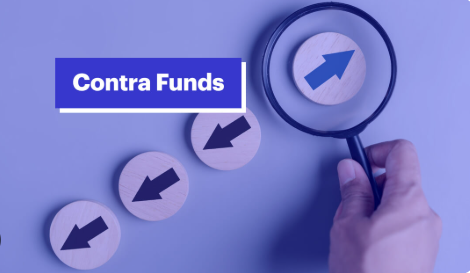
I once heard from a friend that she acquired shares in a corporation that everyone was avoiding, immediately after a controversy caused its stock price to collapse. Two years later, the company recovered and her investment doubled. That’s essentially the entire philosophy behind a contra fund, except instead of one person betting on one stock, a professional fund manager does this systematically across an entire portfolio.
Betting Against the Crowd, On Purpose
Most equity funds chase what’s working. A contra fund does the opposite. It deliberately hunts for stocks that the market has written off, businesses going through a rough patch despite having solid fundamentals underneath. SEBI rules require these schemes to keep at least 65% of their money in equities, so this isn’t some loosely defined strategy. It’s a structured approach with real regulatory boundaries.
Once you sit with it, the explanation becomes pretty evident. If a fundamentally sound company is trading cheap simply because sentiment has turned against it temporarily, buying now and waiting for that sentiment to shift could yield solid returns once the broader market catches up.
Why Patience Becomes the Real Currency Here
Here’s the part most first time investors underestimate. A contra fund doesn’t reward quick decisions. Sometimes a beaten down stock stays beaten down for years before recovering, and sometimes it never recovers at all. Fund managers accept this risk knowingly, and so should anyone investing in this category.
This is fundamentally different from how someone using leverage or derivatives thinks about timing. If you’ve ever used a margin calculator before taking a leveraged position, you know that world revolves around short term price movement and immediate capital requirements. A contra fund sits at the opposite end of that spectrum entirely, favoring years over days.
Where the Real Advantage Lies
Buying unpopular stocks at depressed prices does something interesting to risk. Since these stocks are already trading below their typical valuation, the downside during a market correction tends to be somewhat cushioned compared to overvalued, popular stocks that have further to fall. That’s not a guarantee, just a structural tendency worth noting.
This is also why a contra fund often gets used as a diversification tool. When coupled with more conventional equities assets, its performance helps lessen overall portfolio volatility since it doesn’t necessarily follow the whole market.
The Flip Side Nobody Should Ignore
Not every undervalued stock bounces back. Sometimes a company’s troubles run deeper than temporary bad press, and the fund manager eventually has to exit at a loss rather than keep waiting indefinitely. This opportunity cost is real, and it’s part of why most advisors suggest keeping contra fund exposure to a smaller slice of your overall portfolio, rather than going all in.
A Quick Detour on Capital Planning
Interestingly, investors who split their money between long term contra fund holdings and shorter term trading positions often rely on tools built for very different timeframes. While a contra fund rewards years of patience, someone actively trading on margin uses a margin calculator to figure out exact capital requirements before entering a leveraged trade. Both tools serve completely different purposes, but together they show how differently capital gets deployed depending on your strategy and time horizon.
Who Actually Fits This Strategy
If watching a stock stay flat or dip further doesn’t rattle you, and you’re comfortable waiting five to seven years for a thesis to play out, this category might suit your temperament. If you’d rather see quicker movement, this probably isn’t your fit.



 How Boxing Day Deals Compete With Earlier Holiday Promotions