You may already know the shape you want, or your dentist may have shown you a mockup that finally made everything click. Then comes the part that feels less obvious. How does that planned shape get copied into your mouth with enough accuracy to look natural and function well? That gap between the plan and the final result is where many people feel uneasy, especially if they are fixing worn edges, small chips, uneven front teeth, or spaces that have bothered them for years. For those seeking dental care for adults and children in Aspen, understanding this process can make the journey feel much more comfortable.
The dental putty index solves a very practical problem. It gives your dentist a guide made from a planned tooth form, so the composite can be placed with more control, more consistency, and less guesswork. In simple terms, it helps transfer a design into a real restoration. For patients, that often means cleaner edges, better symmetry, and a more predictable result with composite bonding tooth shape transfer.
The dental putty index turns a planned design into a clinical guide
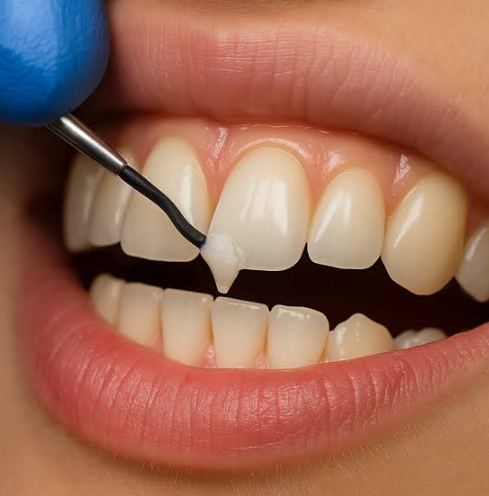
A putty index is usually made from a wax up, mockup, or existing approved tooth shape. The material records the contours of the teeth, then acts as a template when composite is placed. Your dentist can use that template to build the palatal or lingual wall first, then layer composite with a clearer sense of where the final tooth should end up.
That matters because freehand bonding has limits. Even a skilled dentist is balancing shape, thickness, bite, contact points, and polish in a small space, often while you are trying to keep still with your mouth open. If one front tooth is being lengthened or several teeth are being reshaped, tiny differences become easy to see. A putty guide reduces that margin for error.
This technique is especially useful in family and general dentist settings where patients want conservative treatment. Direct composite restorations can preserve tooth structure when the case is suitable, which aligns with the restorative approach discussed in the ADA restorative caries treatment guideline recommendations. The point is not to add material blindly. The point is to restore or improve form while keeping treatment measured and intentional.
See also: Turbine Blend Polish Peen Services to Improve Turbine Life and Performance
Predictability matters when shape, bite, and appearance all meet at once
When people hear “bonding,” they often think only about color and polish. Shape is the real foundation. If the shape is off, the tooth may look bulky, flat, short, or too long, even if the shade match is good. You may also feel that something is wrong before you can explain it. Your tongue notices thickness. Your bite notices edges. Your eye notices asymmetry.
A silicone index for composite bonding helps in cases where those details matter most. Think about a patient with worn front teeth from grinding. The edges need to be rebuilt, but they also need to match the smile line and meet the lower teeth in a way that does not create a new problem. Or think about a teen or adult with a chipped incisor after an accident. Replacing missing structure freehand is possible, but using an index often gives the dentist a stronger starting point and a more repeatable contour.
That is one reason the Michigan Dental Association discussion of direct composite restorations remains so relevant. Direct composite can be conservative and esthetic, but success depends on planning and execution. The transfer step is not a minor detail. It is often what allows the planned result to show up in the final bonding.
The direct index technique supports conservative restorative dentistry
In worn dentition and additive dentistry, the goal is often to rebuild shape without cutting away more tooth than needed. A putty index for composite bonding fits that philosophy well. It supports additive treatment by giving the dentist a matrix based on the desired anatomy. That can help with edge position, incisal length, and facial contour while preserving control over how much composite is added.
Educational programs in restorative dentistry continue to focus on this method for that reason, including the direct index technique in worn dentition and adhesive management presented through Penn Dental Medicine. The message is consistent. Good outcomes come from careful planning, not from rushing the placement phase.
| Approach | What It Helps With | Main Limitation |
|---|---|---|
| Freehand composite bonding | Small repairs, minor contour changes, quick adjustments | More operator dependent for symmetry and exact tooth length |
| Composite bonding with a putty index | Transferring planned shape, building palatal walls, improving consistency | Requires planning time and a mockup or wax up |
| Indirect restorations | Cases needing lab fabrication, larger structural changes, material strength in selected situations | Higher cost and often more involved treatment |
Small planning decisions often change the final result
If you are considering bonding, the details before treatment matter more than most people expect. Ask whether your dentist plans to do a mockup, whether a putty matrix will be used, and how bite changes are checked. If you have a history of grinding, that should be part of the conversation early, not after the bonding chips.
Ask to see the planned shape first. A wax up, digital preview, or mockup gives you a chance to react before material is bonded. This is where you can say a tooth looks too square, too long, or not quite like you. Those comments are easier to address before the final placement.
Ask how the index will be made and used. You do not need a technical lecture. You just want to know whether the dentist is using a guide to transfer the design into the composite. That simple question often reveals how much emphasis is being placed on predictability.
Ask about maintenance after treatment. Even well done bonding needs follow up. Polishing, bite checks, and night guards for grinders can protect the result. General and family dentist care works best when the restoration is treated as part of your long term oral health, not as a one time cosmetic event.
A planned tooth shape deserves an equally planned transfer method
If you have been staring at a chipped edge, uneven front teeth, or wear that makes your smile look older than you feel, your hesitation makes sense. You do not want a fix that looks rushed or feels wrong. The dental putty index gives structure to the process, and that usually leads to more confidence on both sides of the chair.
When you are ready, schedule a visit with a general and family dentist and ask whether a dental putty index or similar matrix guided approach is appropriate for your bonding case.