A terrace or balcony in Finland has to earn its keep during a fairly short window of genuinely pleasant weather, then survive months of freezing temperatures, snow load and repeated thaw cycles without falling apart. That combination of demands makes outdoor space design here a bit different from what works in a milder climate. Getting the material choice right, understanding how frost and meltwater actually damage outdoor structures, furnishing a small space sensibly, adding the right lighting and heating, and knowing how to handle spring maintenance all matter more here than in places where the weather simply is not as harsh. This article covers each of these in practical detail.
Material choices: wood, composite and stone
Wood remains the most traditional and still one of the most popular choices for Finnish terraces, largely because it is a domestic, renewable material with a natural aesthetic that fits well with the wider Nordic design language found in most Finnish homes. Pressure treated pine is the budget friendly standard option, while thermally modified wood, which is heat treated rather than chemically treated, has grown in popularity for its improved dimensional stability and resistance to rot without relying on chemical preservatives. Sites focused on Finnish building materials, including Marulla, have noted that thermally modified wood in particular has become a strong middle ground option, offering better long term performance than standard pressure treated lumber without the significant cost premium of the most exotic hardwood species.
Composite decking, made from a blend of wood fiber and recycled plastic, has gained ground as a lower maintenance alternative, since it does not need staining or sealing the way wood does and resists moisture damage extremely well, though it comes at a higher upfront material cost and some owners find the appearance less warm than genuine wood. Stone and concrete pavers are the third common option, particularly for ground level terraces rather than raised balconies, offering excellent durability and a completely different aesthetic that suits more modern, minimalist house designs, though they require a properly prepared and well drained base to avoid frost heave problems, which brings us to the next section.
See also: 4 Common Cosmetic Dental Treatments Explained Simply
Durability against frost and meltwater
The freeze thaw cycle is the single biggest structural threat to any outdoor terrace or balcony structure in Finland. Water that seeps into small cracks or gaps and then freezes expands with tremendous force, gradually widening those cracks with each cycle until a small imperfection becomes a serious structural problem. This is why proper drainage matters more than almost any other design consideration for outdoor structures in this climate.
For ground level terraces, this typically means a well compacted, properly graded gravel base beneath any pavers or decking, ensuring water always has somewhere to drain rather than pooling and refreezing directly beneath the surface. For raised balconies and terraces attached to buildings, waterproofing membranes and correctly angled surfaces that direct water away from the building structure are essential, since water infiltration at this junction point is one of the most common sources of expensive structural repair in Finnish apartment buildings. Any wood used outdoors also needs gaps left between boards for airflow and drainage, since wood that sits in standing water or trapped moisture will deteriorate far faster than wood that can dry out properly between wet periods.
Furniture and daybed solutions for a small balcony
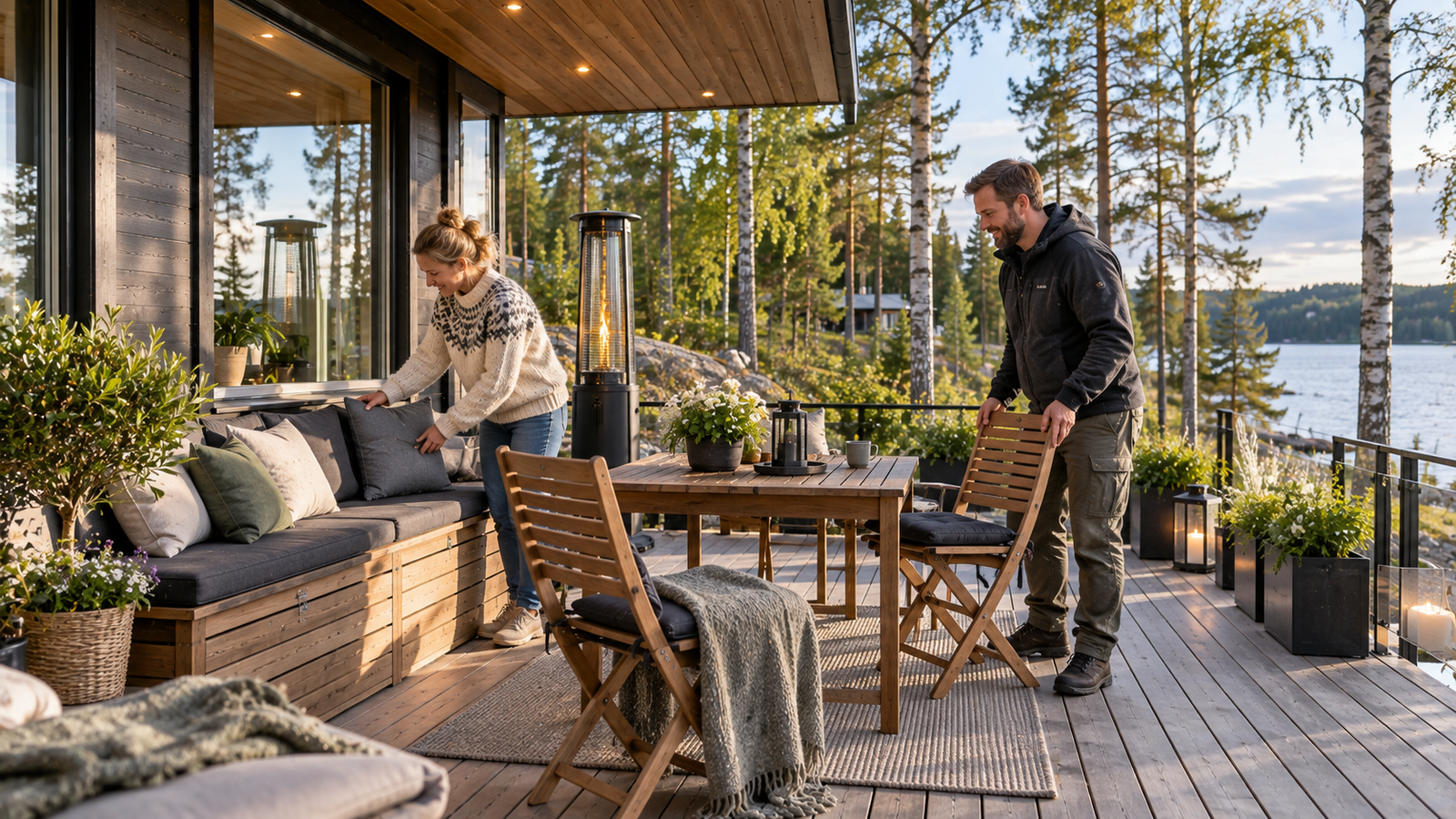
Finnish balconies, especially in apartment buildings, are often compact, which makes furniture choice genuinely important rather than an afterthought. Folding and stackable furniture solves the basic space problem for many balconies, allowing a small dining setup to be tucked away when not in use rather than permanently occupying limited square footage. For those who want their balcony to function as a genuine relaxation space rather than just a spot for a quick coffee, a daybed style bench that doubles as both seating and a place to lie down has become an increasingly popular solution, since it maximizes the functional use of a narrow space better than a traditional sofa and chair arrangement ever could.
Built in storage benches are another practical option worth considering during the planning stage rather than as an afterthought, since they provide both seating and a place to store cushions and outdoor accessories over winter without needing a separate storage solution taking up additional space. Weather resistant fabric cushions rated for outdoor use are worth the extra cost over standard indoor cushions, since Finnish balcony furniture faces far more exposure to sun, rain and temperature swings than furniture used indoors.
Lighting and heating solutions for outdoor spaces
Given how dark Finnish winters get, and how much shorter daylight hours are even during the shoulder seasons compared with summer, good outdoor lighting genuinely extends the usable hours of a terrace or balcony throughout more of the year. String lights remain a popular and affordable choice for creating ambient evening lighting, while more permanent LED fixtures built into railings or overhead structures provide a cleaner, more integrated look for those planning a more substantial renovation.
Heating is what actually extends outdoor use into the colder shoulder seasons in spring and autumn, when temperatures have dropped but there is still enough daylight and dry weather to make outdoor time appealing. Freestanding patio heaters offer flexibility since they can be moved or stored away easily, while built in heating elements integrated into a covered terrace structure provide a more permanent solution for those who use their outdoor space regularly enough to justify the investment. Either option needs weatherproof electrical installation done to proper safety standards, which is worth having a qualified electrician handle rather than attempting as a purely DIY project.
Spring maintenance and upkeep
Every Finnish terrace or balcony needs a proper spring assessment once the snow has fully melted, checking for winter damage before the outdoor season really begins. This means inspecting wood surfaces for any new cracking or graying that needs sanding and resealing, checking that composite decking has not shifted due to ground movement over winter, and confirming that drainage paths are clear of any debris that accumulated over the colder months. Structural fasteners and railings also deserve a check, since the repeated expansion and contraction through winter can gradually loosen connections that were perfectly secure the previous autumn.
Frequently asked questions
What is the best material for a Finnish terrace overall?
There is no single best answer, since thermally modified wood offers a strong balance of appearance and durability, composite suits those who want minimal maintenance, and stone works well for ground level terraces with a more modern design, so the right choice depends on the specific project and priorities.
How much maintenance does an outdoor terrace actually need each year?
Wood terraces typically need cleaning and resealing every one to three years depending on wear and sun exposure, while composite and stone options need far less regular maintenance beyond basic cleaning and periodic drainage checks.
What price range should be expected for a terrace renovation?
Costs vary significantly based on size, material choice and site preparation needs, so it is worth getting multiple quotes and checking published reference pricing from Rakennustieto to judge whether individual quotes fall within a reasonable range for the scope of work involved. Material specification guidance from SFS, the Finnish Standards Association, and technical resources from Puuinfo can also help homeowners understand what quality standards to expect before signing off on a contractor’s proposal.